
Let's be real: researching sweat treatments takes longer than it should. If you've landed on Dermadry but something about it gives you pause (whether that's the zone coverage, the upfront cost, or keeping up with sessions long-term), you're not alone. Here's a look at the top Dermadry alternatives right now so you can stop second-guessing and just pick something that works for you.
TLDR:
- Dermadry works well for hands, feet, and underarms, but requires multiple weekly sessions and no dermatologist support.
- OTC options like SweatBlock, Duradry, and Carpe suit mild sweating but plug ducts at the surface without medical oversight.
- miraDry offers near-permanent underarm results in one to two in-office visits, but costs $1,500 to $3,000 and covers underarms only.
- If you sweat in multiple zones or want to skip the session routine, your options go well beyond iontophoresis devices.
- Twofold pairs you with a board-certified dermatologist online and ships prescription treatments, covering each body zone.
What Is Dermadry and How Does It Work?
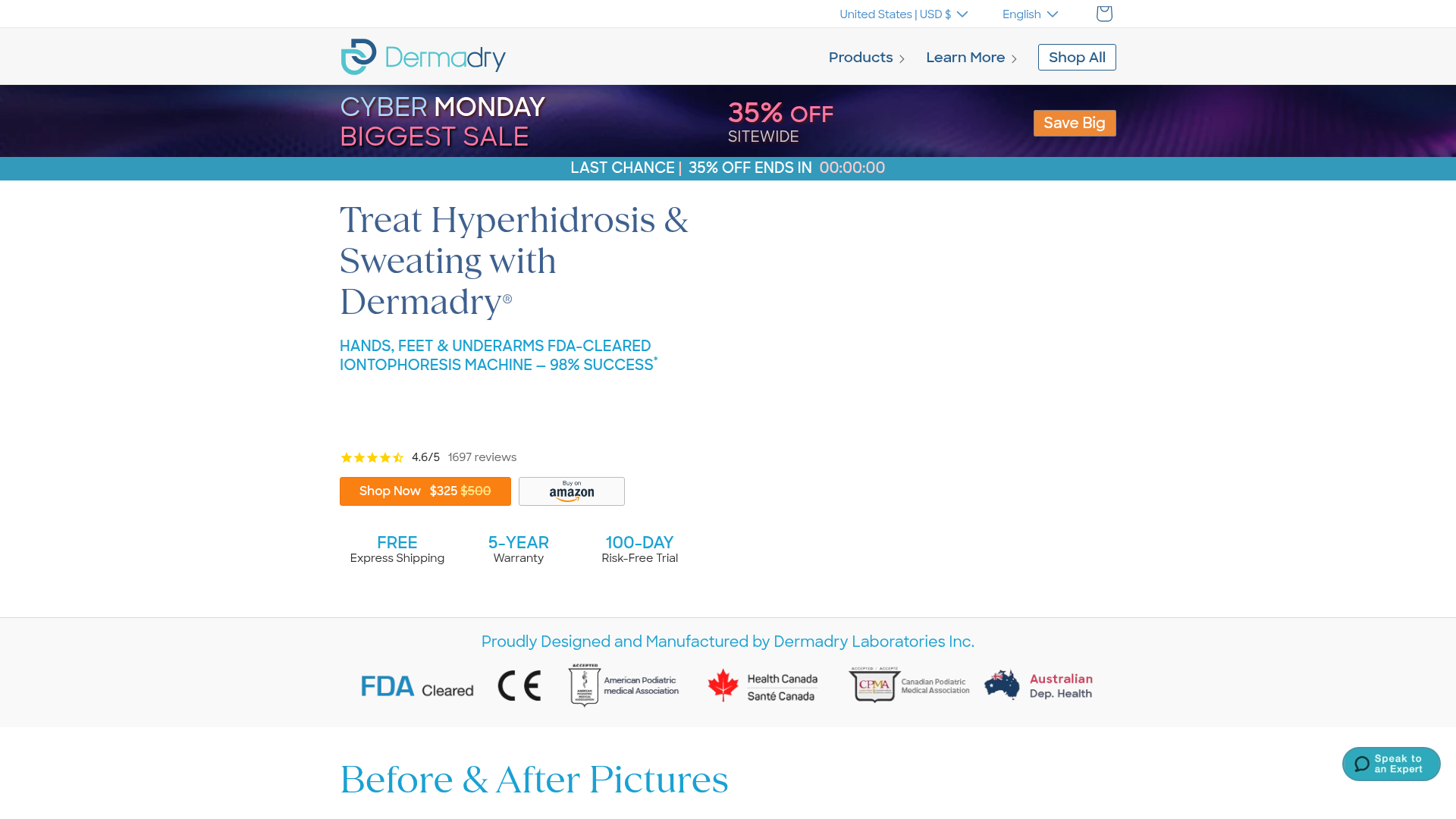
Dermadry is a home-use iontophoresis device cleared by the FDA for treating mild to severe hyperhidrosis of the palms, soles, and underarms. You fill a set of trays with regular tap water, place your hands or feet in them (or apply underarm pads), and the machine passes a mild electrical current through the skin. That current quiets the connection between your nerves and sweat glands, as explained in our iontophoresis for hyperhidrosis guide, calming sweat production in the treated area.
There are three ways to buy it: a unit for hands and feet, one for underarms, or a bundle covering all three zones. Dermadry sells itself as a drug-free, one-time purchase instead of a recurring medication.
The routine takes some upfront commitment. During the initial phase, you typically run sessions three to five times a week at 20 to 30 minutes each, then taper to occasional maintenance once you reach your target dryness.[1]
A few caveats worth knowing:
- In the U.S., iontophoresis machines require a doctor's prescription.
- It isn't right for everyone. Standard contraindications include pacemakers, certain heart conditions, and metal implants.
Why Consider Dermadry Alternatives?
If you have palmar, plantar, or axillary sweating and you want to steer clear of medication entirely, Dermadry is a reasonable choice. Its evidence base for hands and feet is solid: a systematic review of palmar hyperhidrosis found over 80% of iontophoresis users saw improvement. For the right person, willing to keep up with a structured routine, it does what it claims.
The question worth asking is whether it fits your situation. A few gaps tend to push people toward other options:
- Zone limits. Dermadry reaches hands, feet, and underarms only. Facial, back, chest, and groin sweating fall outside what the trays can treat. If excessively sweaty hands are your main concern, it's worth understanding what drives that before choosing a device.
- Ongoing session load. Beyond the demanding startup phase, maintenance sessions continue indefinitely to hold results, which is hard to keep up while traveling and keeping a nightly routine.
- No dermatologist attached. You buy a device, not a care relationship, so if results stall there's no built-in path to adjust course.
- Upfront cost plus a prescription requirement before you can even buy in the U.S.
If any of these describe you, looking around makes sense.
Best Dermadry Alternatives in July 2026
Twofold - Best Overall Dermadry Alternative
Twofold is a virtual sweat clinic that pairs you with board-certified, sweat-specialized dermatologists entirely online, then ships prescription treatments right to your door. No in-person visit, no insurance required. If you tried Dermadry or ruled it out because you need wider coverage, clinical guidance, or a lighter daily routine, it is worth considering as a next step.
What they offer:
- Treats hands, feet, underarms, face, back, chest, and groin, so you aren't boxed into three zones (particularly useful for focal hyperhidrosis that affects multiple areas)
- Dermatologist-guided care with unlimited follow-up messaging; dose and frequency are tuned to you
- No equipment, no sessions, nothing to leave home when you travel
- Oral options (oral glycopyrrolate, oral extended-release oxybutynin) and topical options when a dermatologist finds them to be a good fit, including combination plans
Best for: People sweating in multiple zones, anyone who found iontophoresis too demanding, frequent travelers, people looking for a lower upfront cost, and those who want a dermatologist in the loop.
Bottom line: Twofold covers more of the body than Dermadry, drops the session burden entirely, and runs at a lower upfront cost.
miraDry
An FDA-cleared, in-office procedure that uses microwave energy to permanently destroy underarm sweat glands, done under local anesthesia in about an hour.
What they offer:
- Near-permanent underarm sweat reduction (underarms only)
- Also cuts underarm odor and hair
- One or two sessions, no ongoing medication
- Strong long-term evidence
Good for: Treatment-resistant underarm sweating where you want a lasting fix in that one area.
Key limitation: Underarms only, so palms, soles, face, and generalized sweating are off the table. Short-term side effects include bruising (67%), pain (56%), swelling (44%), numbness (28%), and nodules (22%), most of which resolve within a few weeks. It is also irreversible. Cost typically lands between $1,500 and $3,000 or more per treatment, which is comparable to the cost of Botox for hyperhidrosis.
Bottom line: A well-evidenced choice for stubborn underarm cases, though its zone limit and price make Twofold the easier starting point for most people.
SweatBlock
A direct-to-consumer OTC antiperspirant brand selling aluminum-based wipes, roll-ons, lotions, sticks, and deodorants for underarms, body, hands, feet, and face. No prescription.
What they offer:
- Wide OTC range across several zones
- No intake or prescription, available immediately
- Multiple products aimed at specific areas
- 100-day money-back guarantee
Good for: Mild or situational sweating where you'd rather skip a medical process.
Key limitation: Self-directed, with no oversight, no dose adjustment, and no escalation if it falls short. The aluminum mechanism plugs ducts at the surface, and irritation is a known risk.[2] For diagnosed hyperhidrosis, prescription-level treatment options are available that work on a different mechanism.
Bottom line: A fair first try for mild sweating, but if OTC hasn't worked, Twofold uses a different mechanism with a dermatologist attached. For zone-specific tips, see our guide on managing excessive feet sweating.
Duradry
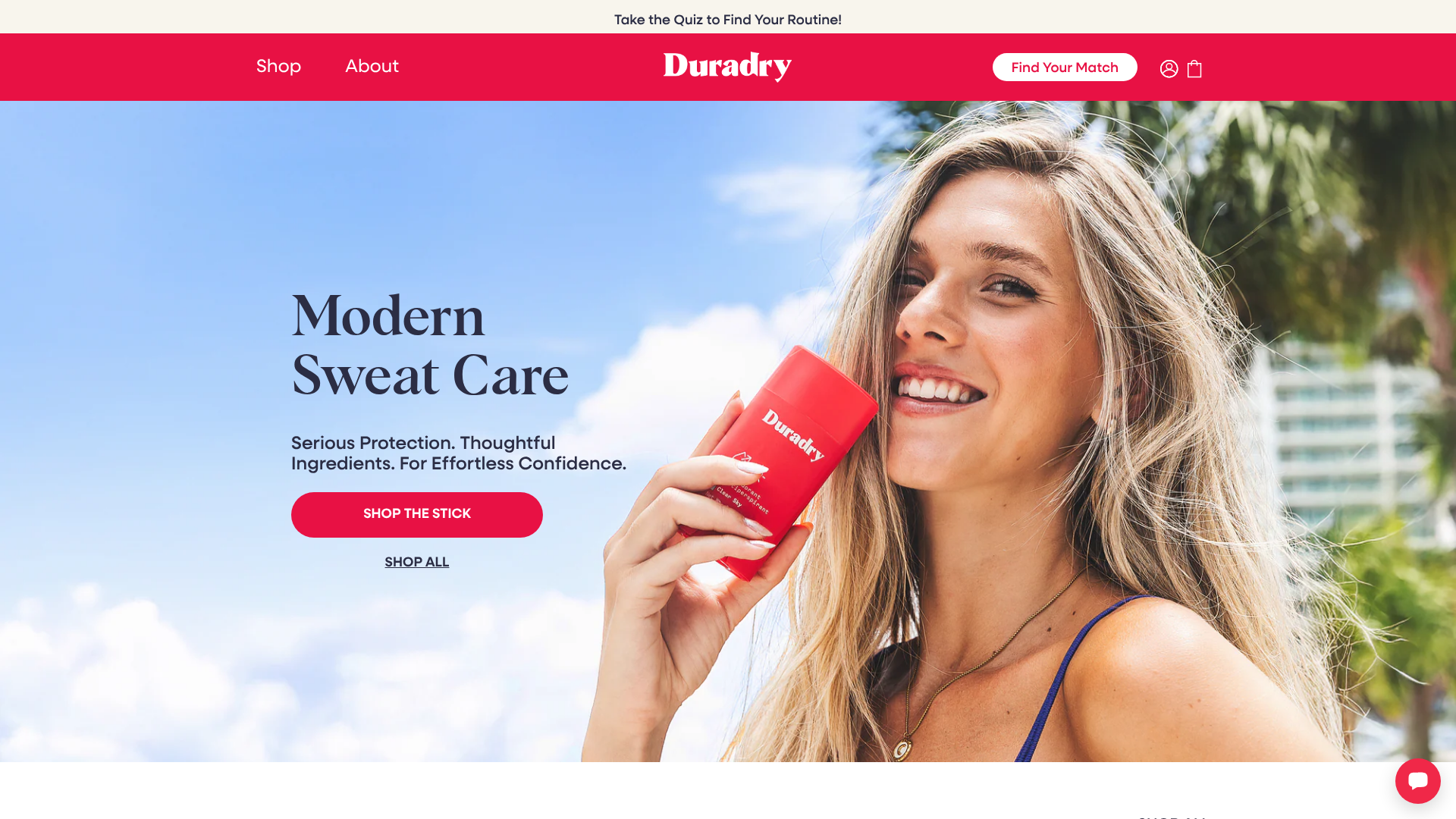
A direct-to-consumer OTC brand selling clinical-strength antiperspirant sticks, gels, body washes, wipes, and sprays, positioned around clean ingredients (silicone-free, talc-free, alcohol-free, vegan).
What they offer:
- Clinical-strength aluminum antiperspirants in several formats
- Subscribe-and-save at 15% off, ships internationally
- No prescription
- 60-day guarantee
Good for: Everyday excessive sweating where you want an ingredient-conscious option and haven't tried clinical-strength yet.
Key limitation: An OTC skincare brand, not medical treatment, so there is no physician oversight or way to escalate. Same surface-level duct-plugging as other antiperspirants.
Bottom line: Fine if you haven't tried clinical-strength products, but for moderate-to-severe hyperhidrosis, Twofold works on the nerve signal instead of the duct surface. If you're still weighing devices, our guide on choosing an iontophoresis machine covers what to look for.
Carpe
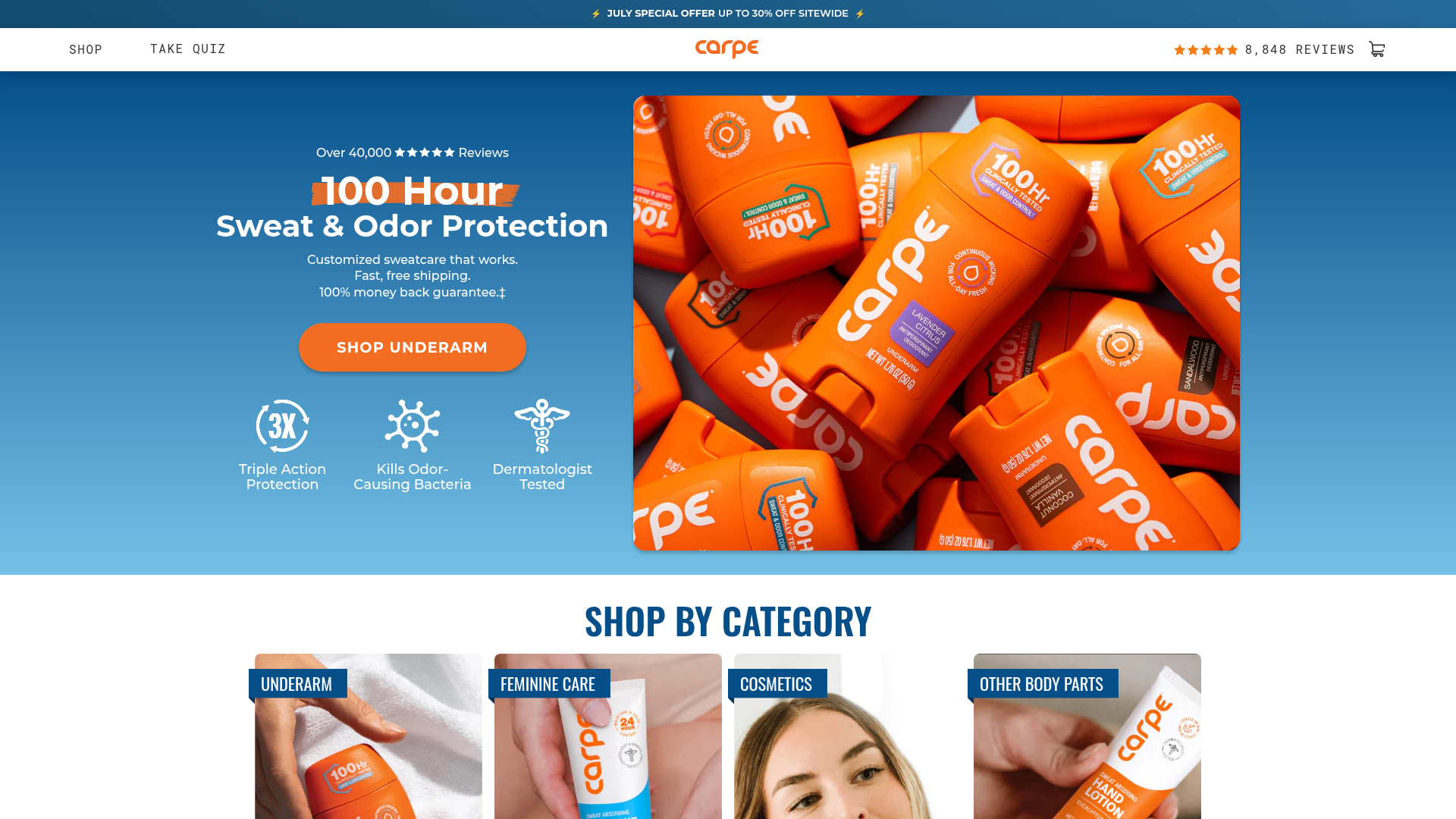
A direct-to-consumer OTC brand with antiperspirant lotions, sticks, powders, and primers across the widest zone range here, including underarms, hands, feet, face, groin, and scalp. All aluminum-based, no prescription.
What they offer:
- OTC coverage across the most zones of any OTC brand listed, scalp included
- Tiered subscription discounts (15% to 30% off bundles)
- No prescription required
Good for: Mild to moderate sweating across multiple body zones, especially if you want one brand to cover everything from hands and feet to face and groin without a doctor's visit.
Key limitation: Like other OTC antiperspirants, Carpe works by plugging sweat ducts at the surface with aluminum salts. There's no clinician oversight, no way to escalate if it stops working, and no meaningful mechanism for moderate-to-severe hyperhidrosis. Zone variety is a plus, but surface-level coverage has a ceiling.
Bottom line: A solid first-line option for mild sweating across several areas, and the widest OTC zone coverage on this list. If you've already tried it without enough relief, Twofold covers similar zones with a prescription-strength mechanism and a board-certified dermatologist included.
Feature Comparison: Dermadry vs Top Alternatives
| Feature | Dermadry | Twofold | miraDry | SweatBlock | Duradry | Carpe |
|---|---|---|---|---|---|---|
| Prescription required (U.S.) | Yes | Yes | Yes (procedure) | No | No | No |
| Body zones treated | Hands, feet, underarms | Hands, feet, underarms, face, back, chest, groin | Underarms only | Multiple (separate SKUs) | Primarily underarms/body | Multiple (separate SKUs, incl. scalp) |
| Dermatologist oversight | No | Yes, included, unlimited | Yes | No | No | No |
| Session/time commitment | 20-30 min sessions per area, 3-5 times/week | Once daily application | One or two in-office procedures | Self-directed daily use | Self-directed daily use | Self-directed daily use |
| Upfront cost | ~$500 device (varies by model) | $0 hardware; $150/quarter subscription ($50/mo) | $1,500-$3,000+ per treatment | $14.99-$34.99 per product | $12-$18 per product | $19.95-$47.95 per product |
| Reversible | Yes (stop sessions, effect fades) | Yes | No, permanent | Yes | Yes | Yes |
| Travel-friendly | No, requires hardware, water, outlet | Yes, carry-on accessible | N/A (in-office procedure) | Yes | Yes | Yes |
This table reflects the features most relevant to managing hyperhidrosis, and it's meant as a starting point for narrowing your options. For a broader look, see our guide on how to stop sweating. Individual suitability varies with your sweat pattern, medical history, and which areas you're treating. For personal health questions, talk with a licensed provider before deciding.
Why Twofold Is a Strong Dermadry Alternative
For palmar and plantar sweating, Dermadry has earned its reputation. If you want a drug-free approach and you are ready to keep up with a structured session schedule, it is a well-researched choice that works for many people. Where it runs into limits is narrow zone coverage, the indefinite session burden, and the absence of any clinician to adjust course when results plateau.
Those are the exact gaps Twofold was built to fill: a dermatologist-guided treatment that reaches the full body with no equipment and unlimited follow-up included. In a 2024 systematic review of topical oxybutynin, 73.6% of patients saw clinically meaningful improvement versus 42.8% on placebo (p<0.00001).[3] If your needs run past what iontophoresis can cover (whether that is more zones, a simpler routine, or a board-certified dermatologist in your corner), or if you are curious about hyperhidrosis surgery as a last resort, Twofold offers a prescription-level path with no in-person visit and no upfront device cost. Results are not guaranteed, and sweating can return if treatment stops. For personal health questions, talk with a licensed provider before deciding.
Final Thoughts on the Best Dermadry Alternatives
The right choice depends on where you sweat, how much routine you can commit to, and whether you want a dermatologist involved. Dermadry is a strong option for some, and other paths exist for everyone else. A licensed provider can help you sort out what fits your situation best.
FAQ
Why do people look for Dermadry alternatives?
Dermadry works well for hands, feet, and underarms, but it has real limits: it can't treat facial, back, chest, or groin sweating, sessions must continue indefinitely to hold results, and there's no clinician attached if your progress stalls. People also find the startup schedule (up to five sessions a week) hard to maintain.
When does switching from Dermadry to a prescription option like Twofold make sense?
If you're sweating in areas the trays can't reach, if keeping up with regular sessions has become unsustainable, or if results have plateaued with no clear way to adjust course, a prescription-based option is worth considering. Twofold's treatment options cover more of the body and pairs you with a board-certified dermatologist who can tune your treatment over time.
What should you look for in a Dermadry replacement?
Focus on three things: zone coverage (does it reach everywhere you sweat?), the level of clinical oversight included, and how well the routine fits your daily life. A device, an OTC antiperspirant like Carpe or SweatBlock, and a prescription telehealth service like Twofold all solve different pieces of that equation depending on your situation.
How does Twofold's cost compare to Dermadry and other alternatives?
Dermadry requires an upfront device purchase of around $500, plus a prescription before you can buy in the U.S. Twofold runs $150 for a three-month supply ($50/mo) with no hardware cost, no in-person visit, and dermatologist follow-up included. OTC options like Duradry and Carpe run $12 to $48 per product with no prescription needed, but without medical oversight or a way to escalate if they fall short.
Is miraDry or Twofold a better starting point for underarm sweating?
miraDry is a strong option for treatment-resistant underarm sweating where you want a near-permanent result in that one zone, but it costs $1,500 to $3,000 or more and is irreversible. Twofold covers underarms along with several other zones, costs less, and can be stopped at any time, making it a sensible starting point for most people before considering a permanent procedure.
If you see a mistake or something you think should be updated, let us know at hello@itstwofold.com!


