
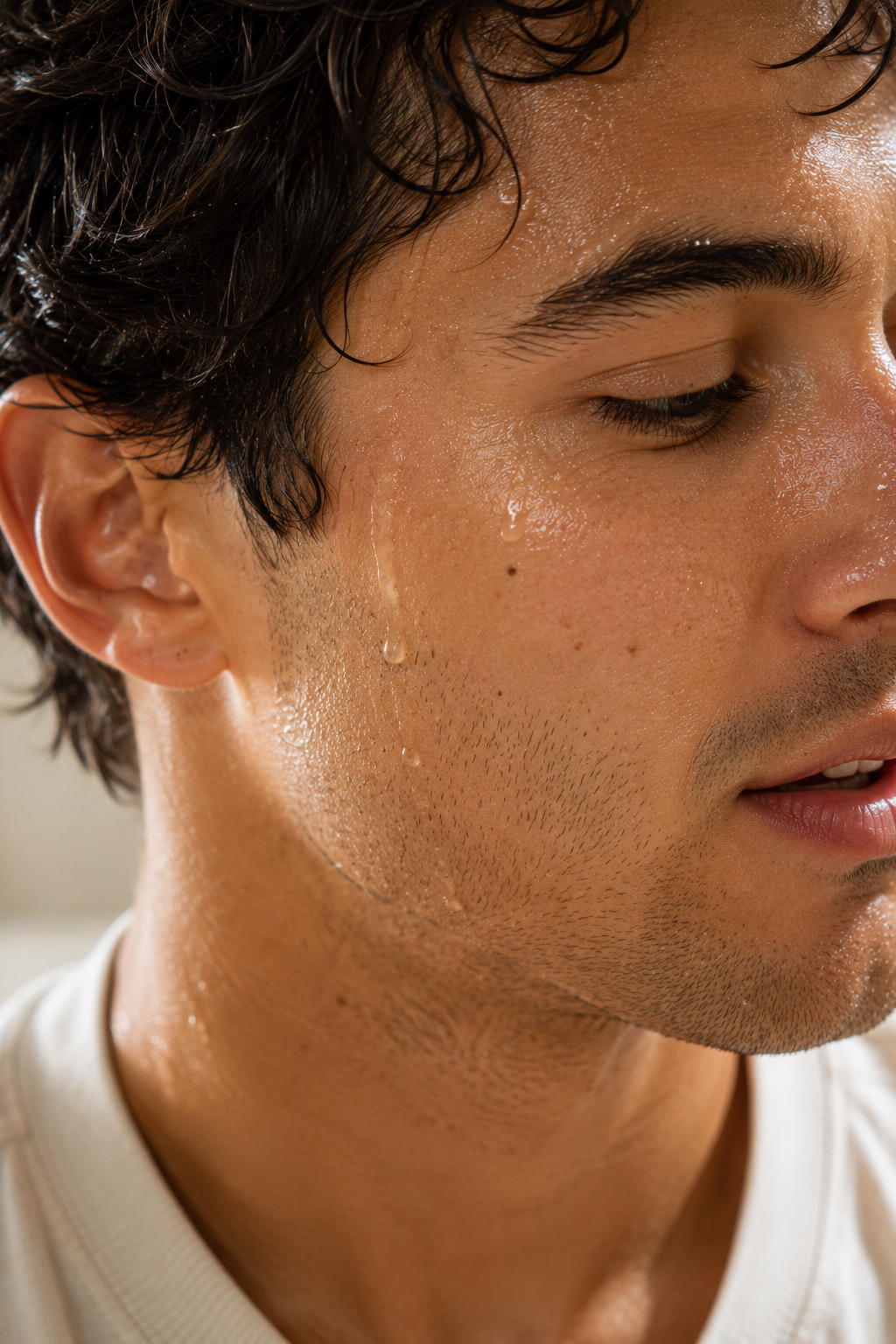
Sweating after eating is something most of us have felt after a bowl of spicy ramen or a hot curry. But gustatory sweating, especially when it's Frey's syndrome or diabetic gustatory sweating, is a different thing entirely. It shows up with any food, hits the face and scalp, and can make every meal feel like something to dread. Here's what's actually behind it and what you can do.
TLDR:
- Gustatory sweating (sweating while eating) has two main causes: Frey's syndrome from nerve damage near your ear, or diabetes-related nerve changes.
- The auriculotemporal nerve misfires after injury, sending saliva signals to sweat glands instead, which triggers facial sweating and flushing.
- A 2021 cross-sectional study (PMC8502225) found gustatory sweating affects 13% of people with Type 2 diabetes, roughly double the rate in people without diabetes.
- Botox injections, topical anticholinergics, and oral medications like glycopyrrolate are the main treatment options; your doctor can help you choose.
- Twofold connects you with independent dermatologists online for compounded topical and oral anticholinergic treatment.
What Is Gustatory Sweating?
Gustatory sweating is sweating that shows up while you eat, right after you finish, or from thinking about or smelling food. For most people it lands on the face, scalp, forehead, or neck.
Two forms come up most often, and this article covers both:
- Frey's syndrome, which usually follows surgery or injury near the parotid gland by your ear.
- Secondary or diabetic gustatory sweating, tied to nerve changes from conditions like diabetes.
Ordinary post-meal warmth from hot soup fades quickly and comes from temperature. Gustatory sweating is triggered by eating itself, hits the same spots, and shows up even with cool food.
Is Sweating After Eating Normal?
A little sweat over spicy noodles or a steaming curry is normal. This is physiologic gustatory sweating: mild, expected, triggered by hot or capsaicin-heavy food, and gone once the meal ends.
The picture changes when sweating comes with any food, not spicy ones alone, or spreads across large areas of your face and upper body. Excessive or unpredictable sweating that shows up regardless of what you eat leans toward the pathological end, pointing to a condition like hyperhidrosis, and is worth a closer look.
What Causes Gustatory Sweating?
The causes split into two camps.
The most common is Frey's syndrome, which follows surgery, injury, or infection near the parotid gland by your ear. When the auriculotemporal nerve is damaged, its fibers regrow and some mistakenly connect to sweat glands instead of the salivary gland. So a signal meant to trigger saliva triggers sweat. Cleveland Clinic calls this misdirected nerve regeneration.
Other causes include:
- Diabetes-related autonomic neuropathy, where high blood sugar damages sweat-controlling nerves.
- Physical trauma to the face or neck.
- Infections like mumps that inflame the parotid gland.
- Idiopathic cases, where no clear trigger is found.
The Nerve Involved in Gustatory Sweating
The auriculotemporal nerve sits at the center of this. It runs near your ear and jaw, normally carrying parasympathetic signals to the parotid gland to make saliva when you eat.
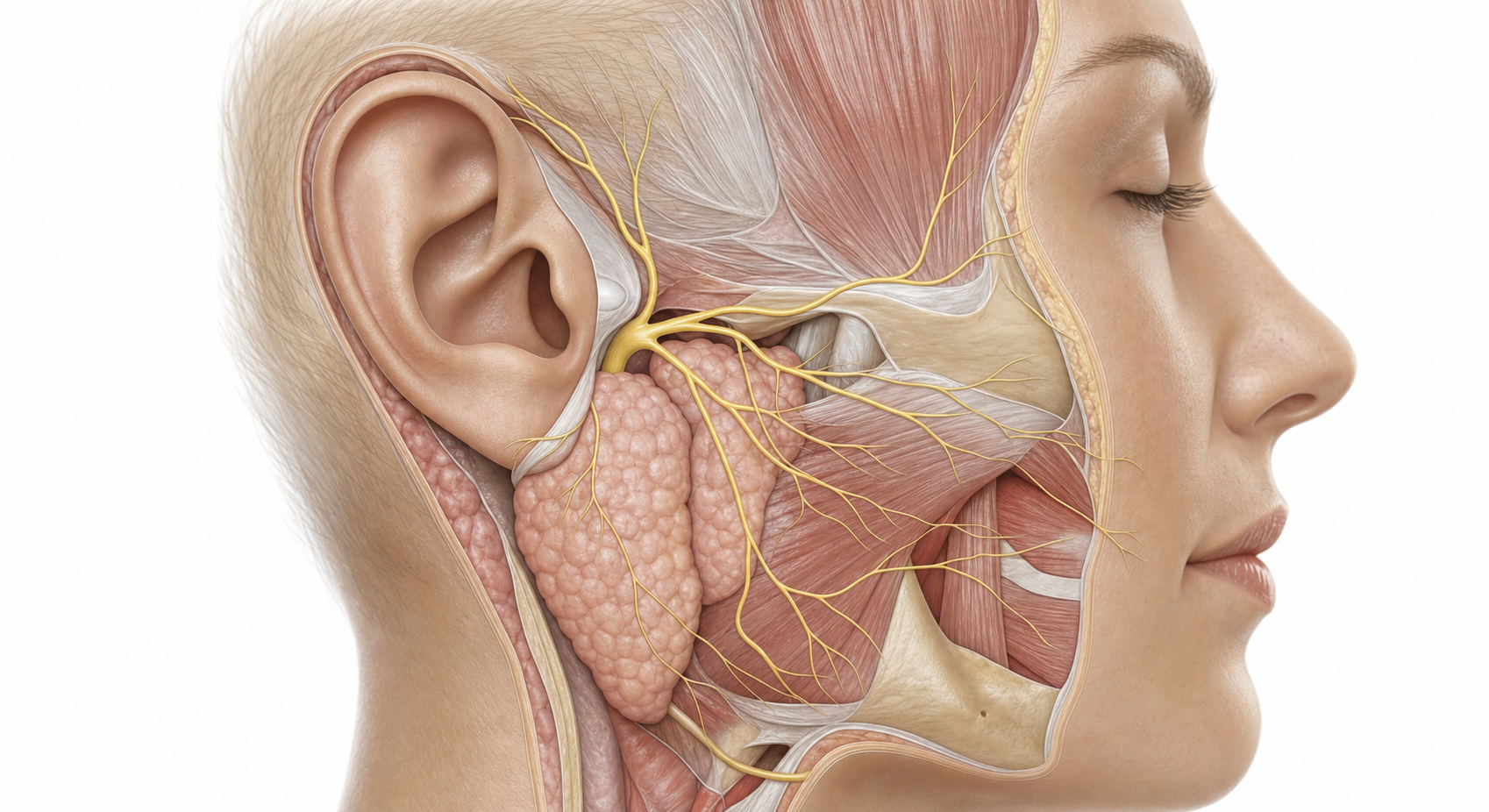
When that nerve is cut or crushed, the fibers grow back to heal. Sometimes they reconnect to the wrong targets, attaching to sweat glands and skin blood vessels instead of the salivary gland. Doctors call this aberrant reinnervation.
The result is a crossed wire. A signal meant for saliva now triggers sweating and flushing on your cheek.
Symptoms of Gustatory Sweating
The symptoms tend to show up in the same places: the cheek, temple, skin around your ear, and sometimes the forehead, neck, or upper chest. Sweating often comes with flushing and a warm feeling across that patch of skin.
Where it lands tells you something:
- Frey's syndrome usually affects one side of the face, near the site of surgery or injury.
- Diabetic or idiopathic gustatory sweating, a pattern consistent with focal hyperhidrosis, appears on both sides over a wider area, sometimes reaching the upper torso.
Sour, salty, spicy, and hot foods are the most common triggers.
Gustatory Sweating and Diabetes
If you have diabetes and notice sweating after meals, autonomic neuropathy is the likely reason. Chronic high blood sugar damages the nerves directing your sweat glands, and signals meant for digestion end up firing your sweat response instead, which is one reason people ask why they sweat so much.
A 2021 cross-sectional study found gustatory sweating in 10% of people with Type 1 diabetes and 13% with Type 2, roughly double the 5% seen without diabetes.
Diabetic gustatory sweating often spreads across the face, head, and upper body. Episodes can vary in duration, but typically resolve once eating stops or shortly after.
Is Gustatory Sweating Dangerous?
Gustatory sweating on its own will not harm you. Frey's syndrome is a leftover effect of past surgery or injury, not a sign of new damage.
The catch is what it can point to. When it appears without a clear cause, or alongside diabetes, it may signal underlying nerve changes worth checking with your doctor.
The bigger toll is often social. Sweating and flushing at every meal, in front of coworkers or friends, wears on your confidence over time, much like nervous sweating in stressful situations.
How Gustatory Sweating Is Diagnosed
Most of the time, a doctor makes the call clinically, working from your symptom pattern and history. Past parotid surgery, facial injury, or a diabetes diagnosis points straight to the cause.
To map how far the sweating spreads, especially in cases of excessive face sweating, they may run the Minor starch-iodine test. Iodine goes on the skin and dries, then cornstarch is dusted over it. Where you sweat, the area turns dark.
For diabetes-related cases, checking for autonomic neuropathy is usually part of the workup.
Treatment Options for Gustatory Sweating
Treatments range from targeted injections to body-wide medication. Here is how the main options stack up, roughly in order of how often they are used:
| Treatment | How it works | Notes |
|---|---|---|
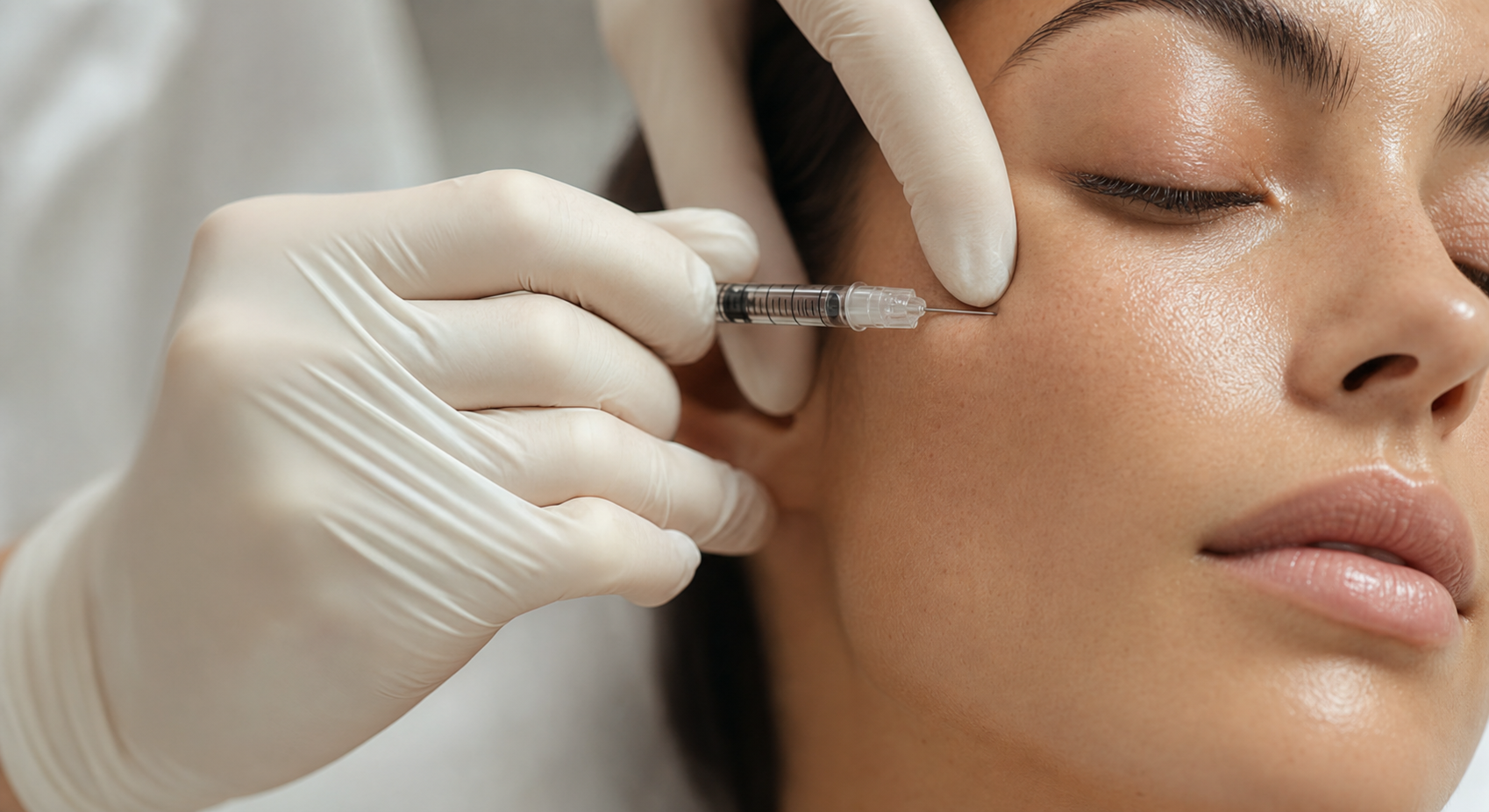
| Botox for hyperhidrosis | Injected into skin to block nerve signals to sweat glands | Most common for Frey's syndrome; temporary, effects typically last 4 to 6 months (sometimes up to 12), repeat injections required |
| Topical anticholinergics | Applied to skin to quiet sweat gland activity, minimal systemic exposure | Topical anticholinergics (including glycopyrrolate formulations) have been studied for facial/gustatory sweating; consult your doctor about options for your specific situation |
| Oral anticholinergics | Glycopyrrolate for hyperhidrosis or oxybutynin block acetylcholine body-wide | Useful when sweating is widespread; common side effects include dry mouth and other anticholinergic effects |
| Antiperspirants | Reduce surface sweating | Mild relief, frequent reapplication |
| Surgery | Interrupts the nerve pathway | Rare, severe cases only; risks compensatory sweating |
Which fits depends on how far your sweating spreads and its cause, so talk options through with your doctor.
Home Remedies and Lifestyle Management for Gustatory Sweating
At-home steps will not rewire the crossed nerves, but they can cut how often and how hard symptoms hit:
- Track meals in a food journal to spot your personal triggers, then ease off spicy, sour, salty, acidic, and hot foods.
- Eat somewhere cool so heat does not stack on top.
- If you have diabetes, steadying blood sugar may lower autonomic dysfunction over time.
- Read more about how to stop face sweating, and wear breathable, moisture-wicking fabrics to keep sweat less visible around others.
When to See a Doctor About Gustatory Sweating
Book a visit when the pattern changes or new signs appear:
- Sweating after eating with no prior surgery or known diabetes.
- Symptoms that keep worsening over weeks.
- Sweating paired with numbness, tingling, dizziness, or other neurological changes.
- Sweating heavy enough to disrupt work, meals, or your social life. See our guide on how to stop sweating for a full overview of options.
A blog can point you in the right direction, but your situation deserves a qualified provider who can assess you in person and rule out underlying causes.
Managing Facial and Excessive Sweating with Twofold
Frey's syndrome usually gets in-person injections. But if your gustatory sweating ties into wider hyperhidrosis, a non-invasive route may fit better.
Twofold pairs you with sweat-specialized dermatologists online. A compounded topical oxybutynin 8% gel, plus oral medication for sweating like glycopyrrolate or extended-release oxybutynin when suited, blocks the same acetylcholine signals to sweat glands.
The path is asynchronous:
- Free online intake.
- Dermatologist review within about 24 hours.
- Discreet delivery in 2 to 5 business days.
Final Thoughts on Living With and Treating Gustatory Sweating
For most people, gustatory sweating is treatable once the root cause is clear. Whether that means Botox, a topical medication, or steadying blood sugar, your options are worth talking through with a qualified provider - you don't have to just avoid soup forever.
FAQ
What is gustatory sweating and how is it different from normal sweating after eating?
Gustatory sweating is sweating triggered by eating, smelling, or thinking about food, landing on the face, scalp, forehead, or neck, not from body heat or physical effort. A brief flush over a bowl of spicy ramen is physiologic gustatory sweating and normal; sweating that hits with any food, spreads across your face and upper body, and lingers for 10 to 30 minutes points toward a pathological cause worth discussing with a doctor.
What causes gustatory sweating: Frey's syndrome vs. diabetic autonomic neuropathy?
Frey's syndrome develops when the auriculotemporal nerve is damaged during parotid gland surgery or facial injury, and its fibers regrow and mistakenly connect to sweat glands instead of the salivary gland. Diabetic gustatory sweating has a different root: chronic high blood sugar damages the autonomic nerves that direct sweat glands, so signals meant for digestion fire your sweat response instead. A 2021 cross-sectional study found gustatory sweating in roughly 10 to 13% of people with diabetes, compared to 5% without.
Is gustatory sweating dangerous?
Gustatory sweating on its own will not harm you, but it can signal something that deserves medical attention. When it appears without prior surgery or a known diabetes diagnosis, or pairs with numbness, tingling, or dizziness, it may point to underlying nerve changes worth checking with your doctor.
How do I stop gustatory sweating: what treatment options actually exist?
Botox injections into the affected skin are the most common treatment for Frey's syndrome, blocking nerve signals to sweat glands for roughly 9 to 12 months before a repeat is needed. Topical anticholinergics like glycopyrrolate cream have been studied for diabetic gustatory sweating, while oral anticholinergics such as glycopyrrolate or oxybutynin work when sweating spreads across a wider area. At home, tracking food triggers, avoiding spicy and acidic foods, and managing blood sugar if you have diabetes can reduce how often and how hard symptoms hit.
Is sweating after eating a sign of diabetes, or could it be something else?
Sweating after eating can be a sign of diabetic autonomic neuropathy, but it can also stem from Frey's syndrome following parotid surgery, a past facial infection, or have no identifiable cause at all. If you have diabetes and notice sweating after meals spreading across your face, head, and upper body, that pattern fits diabetic gustatory sweating, but a qualified provider should assess you to rule out other causes and check for broader autonomic dysfunction.
If you see a mistake or something you think should be updated, let us know at hello@itstwofold.com!


