
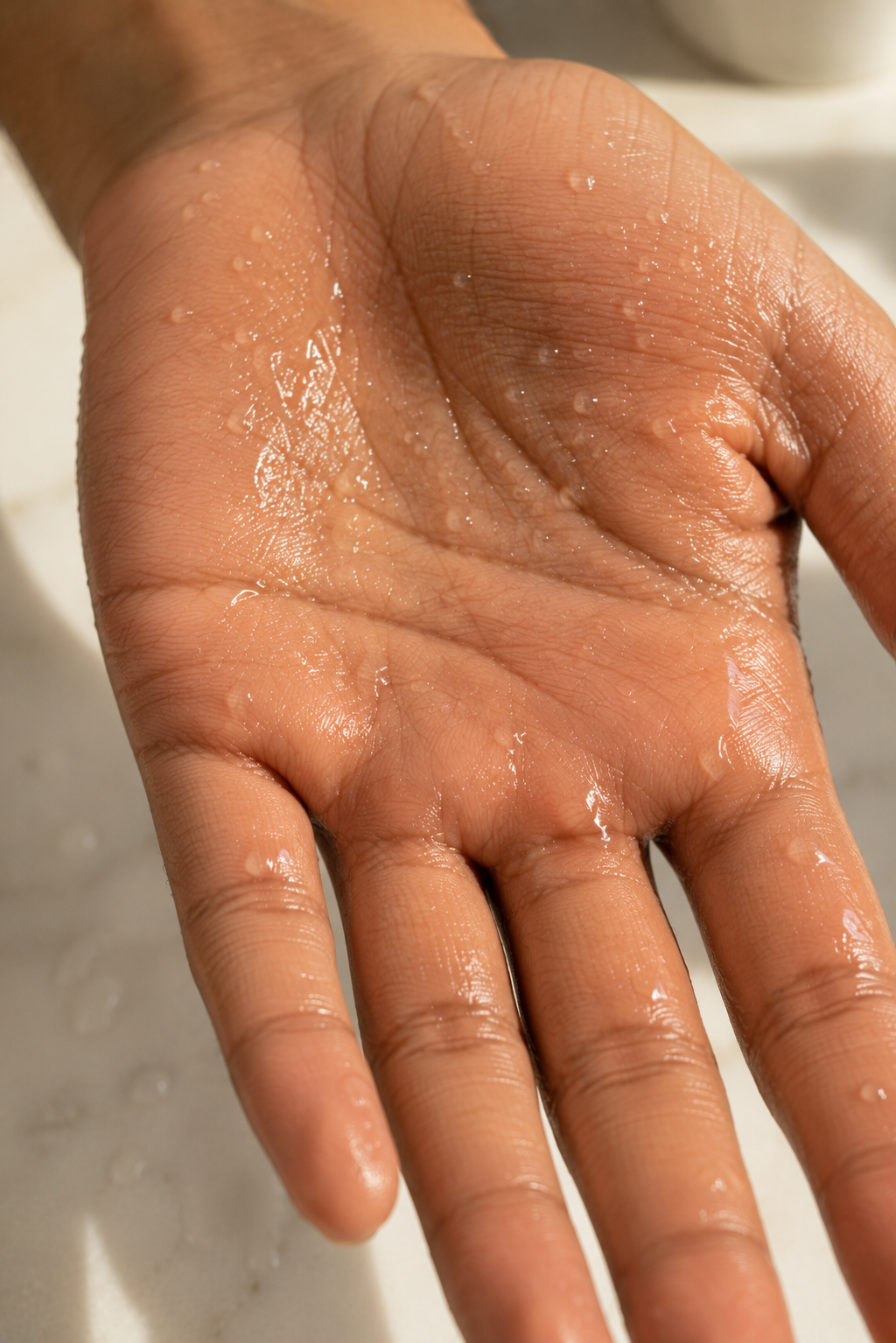
Most people who deal with hyperhidrosis hands have already tried the obvious stuff. Maybe you've gone through multiple antiperspirants for hands, looked up palmar hyperhidrosis home remedies, or wondered if botox for sweaty hands is worth it. The problem is that palmar hyperhidrosis treatment isn't one-size-fits-all, and what works depends on how severe your sweating is and what you've already ruled out. So let's get into the full picture, from natural remedies for sweaty hands and feet to prescription-level palm sweating treatment options, so you can figure out what's actually worth trying.
TLDR:
- Palmar hyperhidrosis affects about 4.8% of Americans, per a 2016 hyperhidrosis prevalence study, and is a recognized medical condition, not nerves or poor hygiene.
- Treatment follows a clear ladder: antiperspirants, then iontophoresis (over 80% improvement rate, per a systematic review in Int J Dermatol), then prescription anticholinergics, then Botox.
- Botox is 80% to 90% effective for sweaty palms but results last only 3 to 6 months and it is off-label for hands in the US.
- Sudden sweaty palms in adulthood can signal thyroid issues, diabetes, or a medication side effect, so see a provider if that fits you.
- Twofold connects you with a dermatologist online to access prescription treatments with expert guidance.
Palmar Hyperhidrosis Treatment Options at a Glance
| Treatment | How It Works | Effectiveness | Key Trade-Off |
|---|---|---|---|
| Antiperspirants (OTC & Rx) | Aluminum salts plug sweat ducts | Mild to moderate relief | Skin irritation; palms respond less than underarms |
| Iontophoresis | Mild electrical current quiets sweat glands | >80% of cases improved‡ | 3 to 4 sessions/week; effect fades if sessions are skipped |
| Topical anticholinergics | Blocks acetylcholine signal locally | ~73.6% improvement vs. 42.8% placebo† | Dense palmar skin limits absorption |
| Oral anticholinergics | Blocks acetylcholine signal body-wide | 60 to 97% symptom improvement§ | Systemic side effects: dry mouth, constipation, brain fog |
| Botox injections | Blocks nerve signals to sweat glands | 80 to 90% effective¶ | Results last 3 to 6 months; temporary grip reduction in ~2/3 of patients* |
| ETS Surgery | Cuts sympathetic nerves feeding the hands | 94%+ sweat reduction at treated site# | Irreversible; compensatory sweating in 36.5 to 90% of cases |
* Temporary grip reduction rate per a review of botulinum toxin for palmar hyperhidrosis (Navarrete-Dechent et al., PMC10859206). † 73.6% vs. 42.8% placebo per a 2024 systematic review in JAAD Reviews. ‡ >80% iontophoresis improvement rate per Chudry, Int J Dermatol 2022. § 60 to 97% oral oxybutynin improvement per JAAD Reviews 2025. ¶ 80 to 90% Botox effectiveness per a 2026 systematic review in Frontiers in Medicine. # 94%+ sweat reduction at ETS-treated site per PMC11740069.
What Is Palmar Hyperhidrosis
Palmar hyperhidrosis is the medical name for hands that sweat far more than the body needs. This is a recognized condition, not nervousness or poor hygiene. The sweat glands in your palms fire on their own, producing moisture when others would stay dry.
It is more common than most people realize. An estimated 4.8% of Americans live with hyperhidrosis, and the palms rank among the most affected sites, according to a widely cited 2016 hyperhidrosis prevalence study. It tends to be chronic, often starting in childhood, and shows up regardless of temperature.
What Causes Sweaty Hands
Your palms sweat because of a signal, not the skin itself. Eccrine glands answer to the sympathetic nervous system, your fight-or-flight wiring. In palmar hyperhidrosis, that system stays too switched on, producing sweat with no heat or threat.
For lifelong sweaty palms, this is primary hyperhidrosis, with genetics playing a large role. A family history of the same condition is common in people with primary hyperhidrosis, per StatPearls.
When It Starts Suddenly
Sweat appearing out of nowhere in adulthood suggests secondary hyperhidrosis. Common culprits:
- Overactive thyroid
- Menopause or pregnancy
- Some antidepressants
- Diabetes
Recent changes are worth mentioning to a doctor.
How Palmar Hyperhidrosis Is Diagnosed
Most of the time, a provider diagnoses palmar hyperhidrosis by talking with you. They look for a pattern that separates focal hyperhidrosis from sweating caused by something else.
The standard clinical criteria include:
- Visible excessive sweating for six months or longer
- Sweat on both palms equally
- Sweating that stops while you sleep
- Interference with writing, gripping, or using a phone
- A family history of the same problem
- Onset before age 25
Meet several of these, and primary palmar hyperhidrosis is the likely answer.
Antiperspirants for Sweaty Hands
Antiperspirants are where most people begin. Aluminum salts dissolve into sweat ducts and form plugs that block moisture. The effect is temporary and needs reapplying.
Two tiers exist. Over-the-counter clinical-strength options like Certain Dri and Carpe suit milder sweating, while antiperspirants for hands with prescription formulas reach 20% aluminum chloride hexahydrate, usually applied at night.
The catch is tolerability. Burning, stinging, and irritant contact dermatitis make some people quit. Palmar skin is thicker than underarm skin, so hands may respond less than armpits do.
Iontophoresis for Sweaty Hands
You rest your hands in shallow water trays while a device passes a mild current through them. Iontophoresis for hyperhidrosis works by quieting the sweat glands over time, and a systematic review found over 80% of palmoplantar hyperhidrosis cases improved.

The trade-off is the schedule: 3 to 5 sessions weekly of 20 to 30 minutes, tapering to weekly maintenance. Skip sessions and the effect fades. Home devices run $500 to $1,000, and choosing an iontophoresis machine requires care. Avoid it with a pacemaker, metal implants, or pregnancy, so check with a doctor first.
Prescription Topical Treatments for Sweaty Hands
When antiperspirants stall, a dermatologist can switch mechanisms entirely. Topical anticholinergics, mostly oxybutynin and glycopyrrolate, block acetylcholine, the messenger that tells sweat glands to switch on. Instead of plugging ducts like aluminum does, they quiet the signal upstream.
You apply them to where you sweat, keeping the medication concentrated where you want it and lowering the potential systemic side-effect burden versus a pill.
A 2024 systematic review of topical oxybutynin found meaningful improvement in 73.6% of patients versus 42.8% on placebo.
The hurdle for hands? Palmar skin is dense, and a topical has to get through it to reach the glands.
Oral Anticholinergics for Hand Sweating
Sweat hitting hands, feet, and underarms at once makes zone by zone topicals impractical. That is where pills come in. Oral glycopyrrolate for hyperhidrosis and oral oxybutynin block acetylcholine like topicals, but reach the whole body at once. A 2025 review found oral oxybutynin at 2.5 to 7.5 mg daily improved symptoms in 60% to 97% of patients.
That reach brings systemic side effects:
- Dry mouth
- Constipation
- Blurred vision
- Drowsiness or mental fog
Oxybutynin crosses the blood-brain barrier while glycopyrrolate does not, so cognitive effects are more likely with it. A provider titrates dosing slowly.
Botox for Sweaty Hands
When topicals and iontophoresis have not delivered enough relief, botulinum toxin becomes an option. A provider injects small amounts across the palm, and Botox for hyperhidrosis works by blocking the nerve signals that switch sweat glands on. A 2026 systematic review found it effective for palmar hyperhidrosis, with results lasting roughly 4 to 6 months per Nawrocki and Cha, JAAD 2020.
The catch is grip. About two-thirds of palmar patients may notice a temporary drop in finger strength, which fades as the effect wears off, according to a botulinum toxin palmar hyperhidrosis review.

For palms, Botox is off-label in the United States - FDA approval covers underarms.
Lifestyle Changes and Home Remedies for Sweaty Hands
Before prescriptions, plenty of people want to try things at home. These steps will not switch off overactive glands, but they can take the edge off day to day.
Start with triggers. Caffeine, spicy food, and nervous sweating during stressful situations all nudge the sympathetic nervous system into gear, so cutting back can lower flare-ups.
For short-term dryness:
- Dab hands with absorbent powder or antiperspirant wipes before writing or a handshake
- Keep hands cool and rinse them often
- Skip tight gloves or synthetic materials that trap moisture
Helpful as these are, diagnosed hyperhidrosis usually needs clinical treatment for real relief.
When Surgery May Be an Option
Surgery sits at the very end of the ladder, reserved for severe palmar hyperhidrosis that hasn't responded to anything else. The main procedure, endoscopic thoracic sympathectomy (ETS), is a form of hyperhidrosis surgery that cuts or clips the sympathetic nerves feeding the hands, under general anesthesia.
It works at the treated site. The trouble is compensatory sweating, where the body sweats more elsewhere, with rates running from roughly 36.5% to 90% depending on technique, according to published research.
ETS is irreversible and needs recovery time. Most providers want you to exhaust every non-invasive option first.
When to See a Doctor About Sweaty Hands
Palmar hyperhidrosis itself is rarely dangerous, but a few patterns deserve a provider's eyes. Book a visit if any of these fit:
- Sweat that disrupts writing, gripping tools, using a keyboard, or your job
- A sudden start in adulthood after years of dry hands, which can point to a secondary cause
- Sweating that keeps going while you sleep, unusual for primary hyperhidrosis
- Emotional strain, avoided handshakes, or social withdrawal over time
Excessive sweating can occasionally signal thyroid trouble, diabetes, or a medication effect. If any of those fit your situation, what causes excessively sweaty hands. Yet only about half of people with hyperhidrosis ever raise it with a provider, according to Oshima et al., Journal of Dermatology 2023.
Managing Sweaty Hands With Twofold
If clinic time or guesswork feels like too much, this is where we come in. Twofold pairs you with a sweat-specialized dermatologist online, no in-person visit needed.
Our compounded topical oxybutynin 8% gel is designed to work through the thicker skin on your palms, where many standard topicals stall. Apply it once nightly, as directed by your dermatologist.
- $150 for a three-month supply, no insurance needed
- Free dermatologist review within about 24 hours
- Unlimited dermatologist follow-up messaging
Final Thoughts on How to Stop Sweaty Hands
Sweaty palms affect far more people than you might think, and effective treatments do exist. Whether you start with an antiperspirant or go straight to a dermatologist, the key is simply starting. Your hands do not have to run the show.
FAQ
What causes sweaty hands all of a sudden in adulthood?
Palmar hyperhidrosis that starts suddenly in adulthood often points to a secondary cause, not the primary kind. Common triggers include an overactive thyroid, menopause, pregnancy, diabetes, or certain antidepressants. If your palms were dry for years and changed recently, that pattern is worth bringing up with a doctor.
Is palmar hyperhidrosis dangerous, or just uncomfortable?
About half of people with hyperhidrosis never mention it to a provider (Oshima et al., Journal of Dermatology 2023), which means many go years without knowing effective treatment exists.
What's the best way to treat palmar hyperhidrosis if antiperspirants aren't working?
When aluminum-based antiperspirants fall short on hands, the next steps are typically iontophoresis, prescription topical anticholinergics like oxybutynin or glycopyrrolate, or oral versions of those same medications. Botox for sweaty hands is also an option, with studies showing 80% to 90% effectiveness, though it requires repeat injections every four to six months. The right fit depends on how many body areas are affected, your tolerance for a daily routine, and whether a dermatologist determines a topical or oral approach suits your situation.
Topical oxybutynin vs. oral glycopyrrolate for sweaty hands and feet: which should I try first?
Topical oxybutynin targets the specific area you apply it to, which keeps more of the medication local and lowers the systemic side-effect burden compared to a pill. Oral glycopyrrolate covers the whole body at once, making it a stronger candidate when sweating hits hands, feet, and underarms simultaneously. A dermatologist will weigh your symptom pattern, how many zones are affected, and how you respond to titration before landing on one or a combination of both.
Can I manage palmar hyperhidrosis without going to a dermatologist's office in person?
Yes. Telehealth services like Twofold connect you with sweat-specialized dermatologists fully online, with no waiting room or in-person visit required. After a medical intake, a dermatologist reviews your symptoms within about 24 hours and, if appropriate, writes a prescription for a compounded treatment shipped directly to you. Keep in mind that completing an intake does not guarantee a prescription, and oxybutynin's use for hyperhidrosis is off-label.
If you see a mistake or something you think should be updated, let us know at hello@itstwofold.com!


