
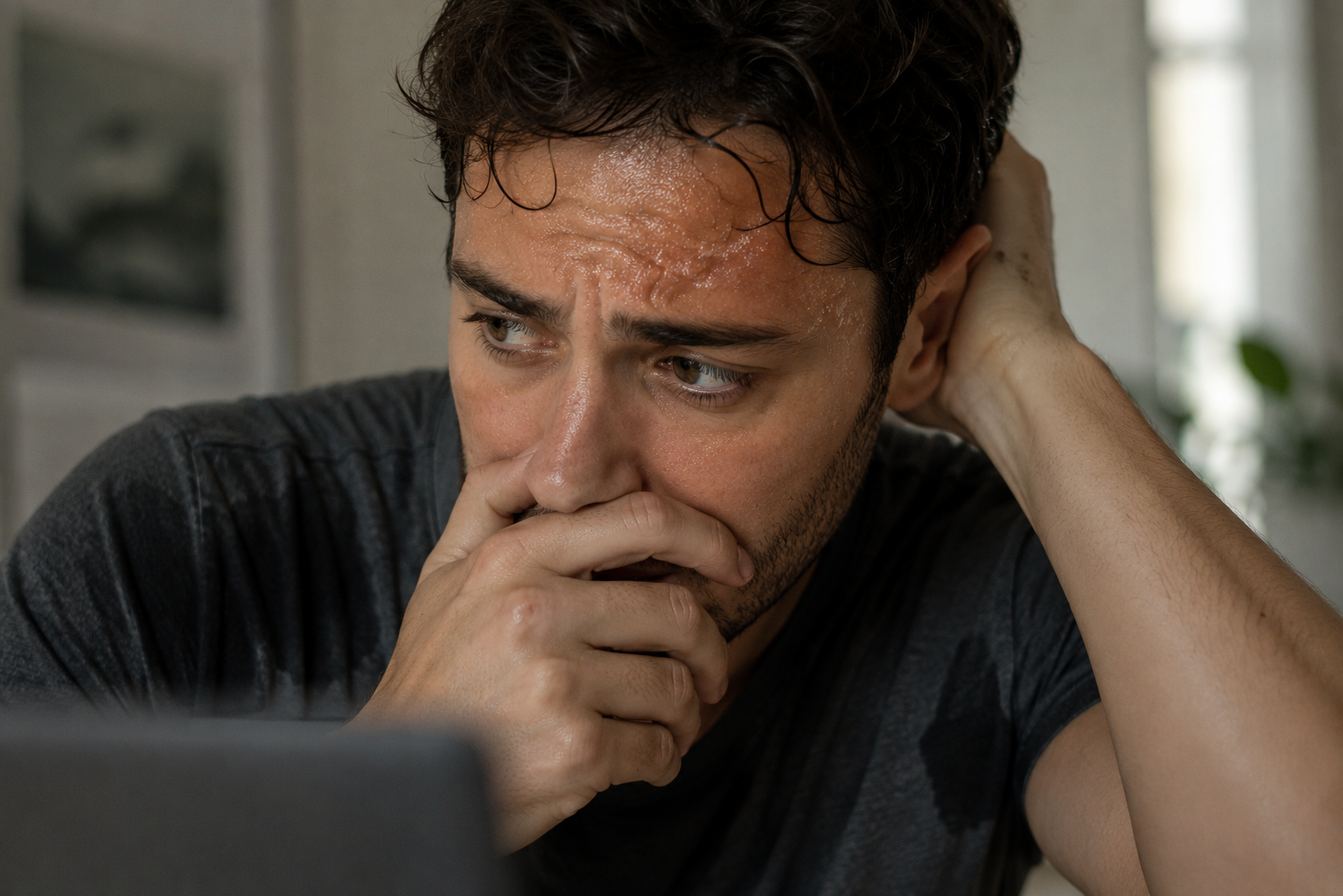
That moment when you feel the sweat starting and then immediately feel more stressed because of it? That's no accident, that's a real feedback loop your nervous system is running on you. Nervous sweating has both a physical and an anxiety-driven side, and treating just one of them usually leaves you stuck. Here's a look at what's actually going on and what tends to work.
TLDR:
- Stress sweat itself is odorless; the sharp, oniony smell comes from skin bacteria breaking down apocrine sweat.
- Treating only anxiety or only the sweat often leaves you stuck, since each one feeds the other in a cycle.
- Apply clinical-strength antiperspirant to dry skin at night, not the morning, so it can seat into your ducts while you sleep.
- A 2024 review found topical oxybutynin helped 73.6% of people versus 42.8% on placebo for excessive sweating.
- Twofold is a virtual sweat clinic where a dermatologist reviews your intake within 24 hours and can prescribe topical or oral treatment options.
What Nervous Sweating Is and Why It Happens
Most of us have felt it. The clammy handshake before a big meeting, the damp shirt that appears right when you want to look composed. Nervous sweating is your body doing what it was built to do, just at an inconvenient moment.
Your skin holds two kinds of sweat glands:
- Eccrine glands produce thin, mostly odorless sweat tied to heat and exercise, your built-in cooling system.
- Apocrine glands respond to emotional stress and release a thicker fluid rich in proteins and lipids.
When your brain reads a situation as threatening, it fires the fight-or-flight response: stress can make you sweat by flooding you with adrenaline and cortisol. Emotional sweating shows up most on the palms, soles, face, and underarms.
Why Stress Sweat Smells Different
Here's the odd part: stress sweat leaves your body with almost no smell at all. The odor comes later, once bacteria on your skin get involved.
Apocrine sweat smells worse because it is thick and loaded with proteins, lipids, and ammonia. To the bacteria on your underarms and skin folds, that mix is a feast. As they break it down, the smell depends on which compounds win out:
- Sulfur compounds create that sharp, onion-like note.
- Fatty acids give off a sour, vinegary edge.
- Ammonia-heavy breakdown can veer toward cat pee.
Because odor is bacterial, it varies from person to person. Your hygiene habits and skin microbes both shape how strong things get.
The Anxiety-Sweating Cycle
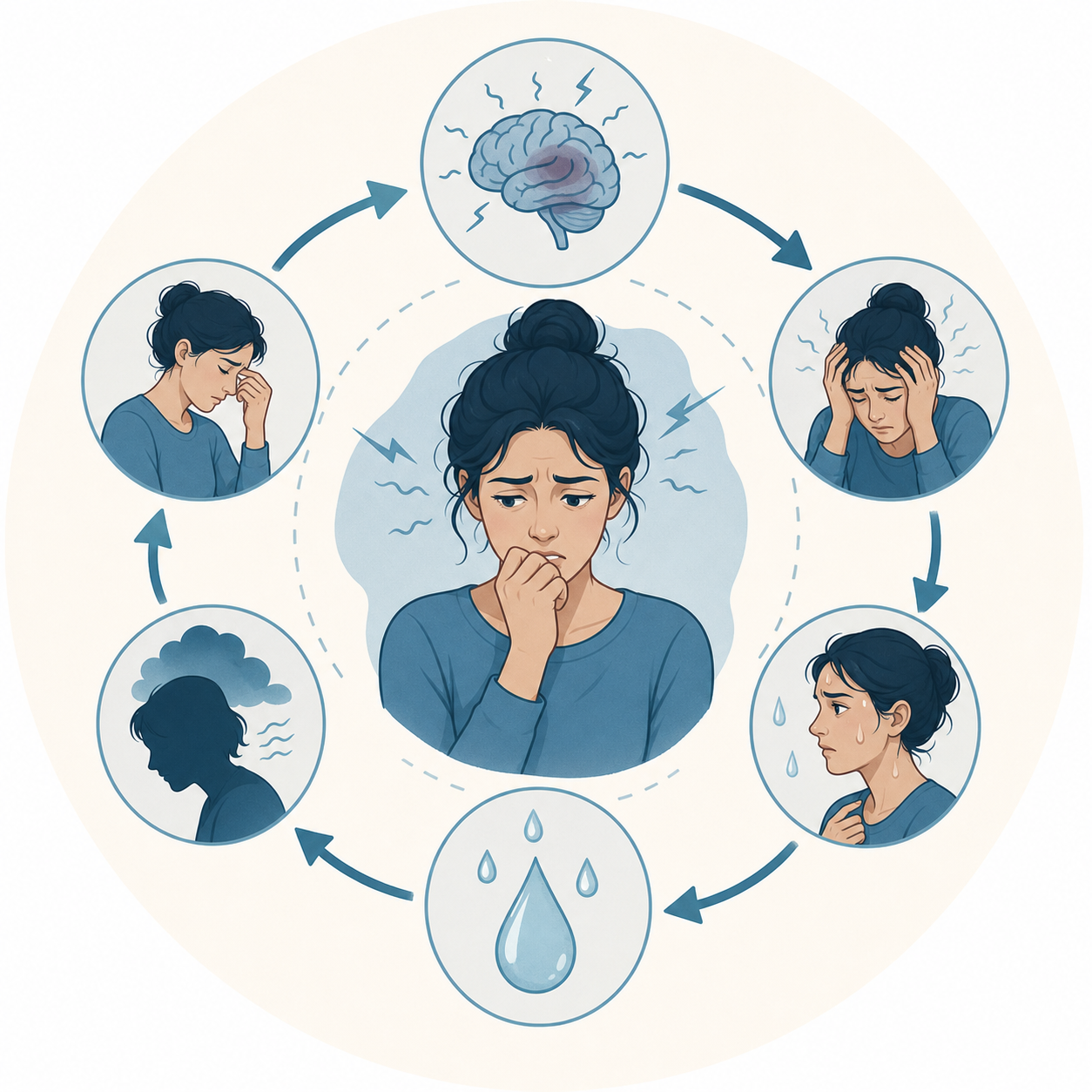
Nervous sweating feeds itself. You start to sweat, you notice it, you worry other people can see it, and that worry cranks up the same stress response that started the sweating. Round and round it goes.
The overlap is well documented. Among people with hyperhidrosis, anxiety runs far higher than the general population, at 21.3% versus 7.5%. Research also points to a meaningful overlap between social anxiety and excessive sweating, though exact figures vary across studies.
That loop is why treating only the anxiety, or only the sweat, often leaves you stuck.
Where Nervous Sweating Tends to Show Up
Nervous sweating rarely hits everywhere at once. It concentrates in a few predictable spots, each with its own quirks.
Underarms
Your armpits pack a dense cluster of apocrine glands, the ones tied to emotional stress. That's why sweat hits here fast and why odor tends to follow.
Face and scalp
Facial and scalp sweating, sometimes called craniofacial focal hyperhidrosis, runs mostly on eccrine glands. This zone is hard to hide, so it carries heavy psychological weight.
Palms and soles
Your hands and feet hold some of the highest eccrine gland density on your body, making them wildly reactive. One tense moment can leave your palms slick.
Because the drivers differ by zone, what calms your hands may do little for your underarms.
In-the-Moment Strategies to Stop Nervous Sweating
When a presentation, date, or meeting is bearing down on you, a few tactics take the edge off in the moment.
- Slow your breathing. Box breathing, four counts in, hold four, out four, hold four, calms the fight-or-flight response that triggers sweat.
- Cool your pulse points. Cold water on the wrists or back of your neck lowers your core temperature fast.
- Keep the room cool and skip the extra layer.
- Dress smart. Breathable fabrics in dark or patterned colors hide damp patches better than solid gray or light blue.
- Apply clinical-strength antiperspirant the night before, so it plugs the ducts while you sleep.
- Ground yourself. Naming five things you can see interrupts an anxiety spiral.
These buy you breathing room. They manage the symptom, though, and none touch the underlying cause.
Long-Term Lifestyle Changes That Reduce Nervous Sweating
The quick fixes handle the moment. What lowers how often nervous sweat shows up is steady work on your baseline. Consistent stress reduction calms how reactive your nervous system is over time, so episodes come less often and hit milder.
A few habits carry most of the weight:
- Regular aerobic exercise trains your body to handle stress better and sharpens how you cool yourself.
- Diet tweaks. Caffeine, alcohol, and spicy food stimulate sweat glands directly, so cutting back trims a trigger you control.
- Steady hydration helps your body regulate temperature without overworking.
- Sleep. Short nights leave your stress response jumpy.
Then there's the anxiety loop. Cognitive behavioral therapy, or CBT, is among the most evidence-backed tools for managing anxiety, working on the worry that fuels nervous sweating. If your sweating ties to social situations or racing thoughts, a few months of CBT can loosen the cycle at its root.
Antiperspirants and Deodorants for Stress Sweat
The two products people reach for get mixed up constantly, and the difference matters. Deodorant covers odor. It does nothing to slow how much you sweat. Antiperspirant uses aluminum salts to temporarily plug your sweat ducts, so less makes it to the surface.
| Product | What it does | Best for |
|---|---|---|
| Deodorant | Masks or neutralizes odor | Smell, not wetness |
| Antiperspirant | Blocks ducts to cut sweat volume | Visible dampness |
Clinical-strength antiperspirants for excessive sweating pack a higher aluminum concentration than the drugstore standard, a sensible first move for many.
Timing matters. Apply to fully dry skin at night, when your glands are calm, and the salts settle into the ducts while you sleep. Morning application washes off before it can seat.
For odor, an antibacterial soap trims the skin bacteria that turn apocrine sweat into those sour, oniony compounds.
Prescription and Medical Treatments for Nervous Sweating
Think of clinical treatments as a ladder you climb with a provider, starting gentle and escalating only if the rung below falls short.
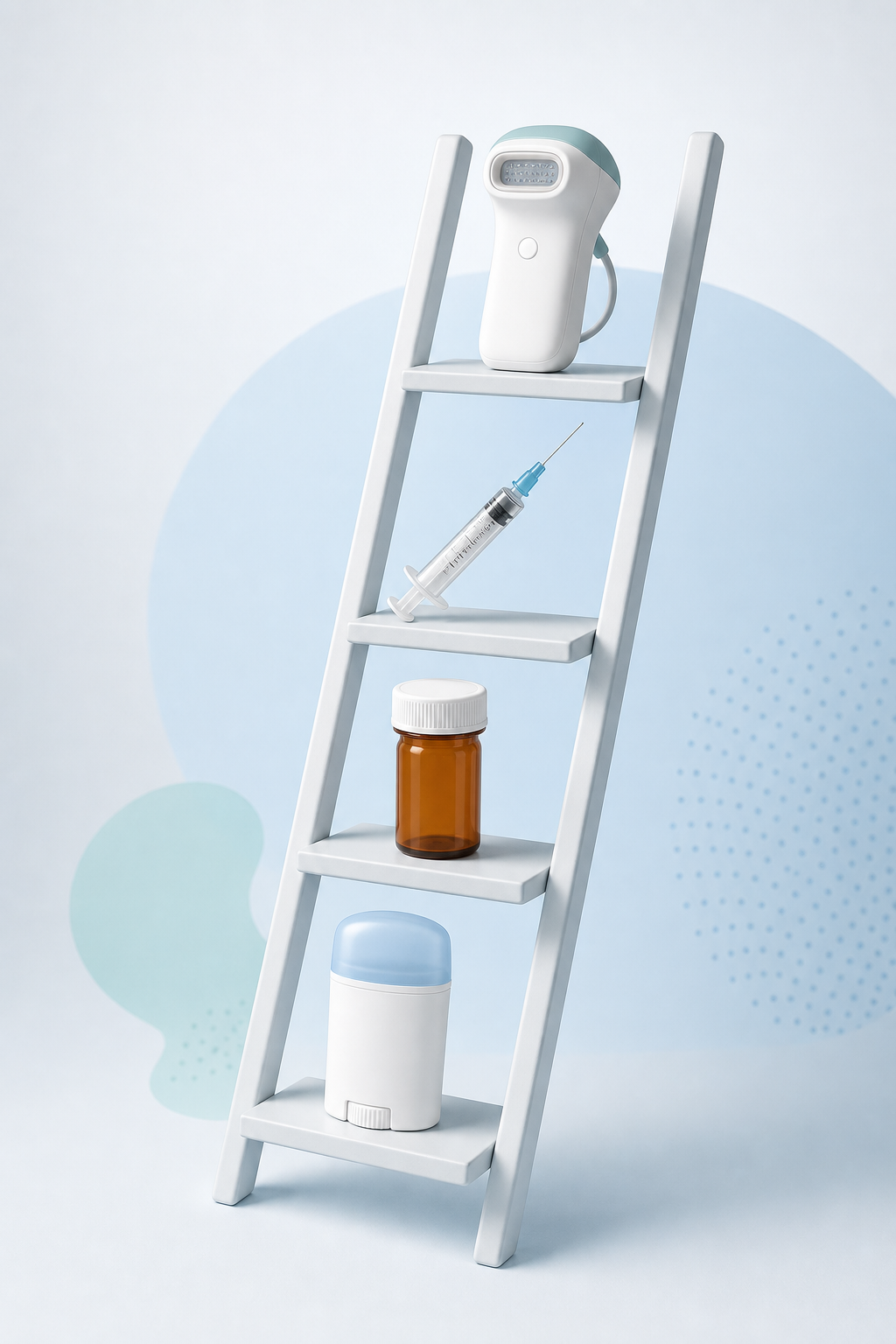
- Prescription-strength antiperspirants: higher aluminum chloride concentration, often applied under occlusion. Works for mild-to-moderate cases, though skin irritation is common.
- Topical anticholinergics: glycopyrrolate and oxybutynin gel block the nerve signal at the application site. A 2024 review found topical oxybutynin helped 73.6% versus 42.8% on placebo. FDA-approved branded options include Qbrexza and Sofdra, both for underarms.
- Oral anticholinergics: useful for generalized sweating, with side effects like dry mouth.
- Botox for hyperhidrosis: effective for localized severe sweating, typically repeated every 4 to 6 months, with some patients seeing effects last up to 12 months.
- Iontophoresis for hyperhidrosis: a drug-free option primarily used for palm or sole sweating, requiring ongoing maintenance sessions to sustain results.
- miraDry: underarms only, typically one or two sessions (varies by provider and individual response).
- Surgery (ETS): reserved for treatment-resistant cases, carrying risks like compensatory sweating.
Because anxiety is the trigger, treating that directly matters too. SSRIs or beta-blockers can lower how often episodes fire. Which rung fits you is a conversation for a provider.
When Nervous Sweating Becomes Something More
Everyone can sweat when nerves kick in. The question is whether yours has crossed from an occasional annoyance into something steadier.
A few signs suggest it's worth a closer look:
- Sweating that shows up often, sometimes with no clear stressor at all.
- Episodes that derail work, social plans, or how you dress.
- Waking up damp, since anxiety can fire the same sympathetic nervous system response at night that it does during the day.
- Sweating paired with dizziness, a pounding heart, or shakiness, which can point toward a panic attack.
Persistent night sweats aren't always about anxiety. They can trace back to hormonal shifts, infections, or other causes worth flagging. What you're facing may be an anxiety disorder, hyperhidrosis, or both. Dizziness during a sweating episode is a conversation for a provider.
When to Talk to a Doctor About Nervous Sweating
Here's something worth sitting with: only about half of people with hyperhidrosis ever bring their symptoms to a provider. Many spend years quietly working around it, unsure whether it counts as a real problem. It does, and it's treatable.
A few signals point toward booking an appointment:
- Sweat soaks through your clothing regularly, even on cool days.
- You've turned down plans or work to avoid being seen sweating.
- Sweating pulls you out of sleep.
- You sweat heavily with no heat or exertion behind it.
- Clinical-strength antiperspirants haven't given you the results you wanted.
This article is a starting point, not medical advice. For your own health, talk with a licensed provider.
How Twofold Approaches Nervous and Anxiety-Driven Sweating
If you have read this far wanting an actual treatment path, here is where we come in. Twofold is a virtual sweat clinic. You fill out an online intake, and a sweat-specialized dermatologist reviews it within about 24 hours, no in-person visit needed.
An available option is a compounded oxybutynin gel at 8%, applied once nightly. Its penetration-enhancing base reaches sweat glands through thicker-skinned spots like hands and feet, and it works across underarms, face, back, and chest. The gel is aluminum-free and fast-absorbing.
When a topical isn't the right fit, the dermatologists also prescribe glycopyrrolate vs oxybutynin options, including oral and combination plans.
A few practical notes:
- Most patients notice initial change within one to two weeks, with steadier results by around four weeks. Sweating returns if you stop.
- Plans run $150 for a three-month supply ($50/mo), with free shipping and unlimited dermatologist follow-up included.
- No insurance required.
Final Thoughts on Nervous Sweating and How to Control It
Sweating when nervous is a normal response that, for some people, crosses into something harder to manage. The range of options out there, from lifestyle shifts to prescription treatments, means you are rarely stuck with just one path. A conversation with a provider can help you figure out which rung of that ladder makes the most sense for you.
FAQ
Why does stress sweat smell like onions or cat pee when regular sweat doesn't?
Stress sweat comes from apocrine glands and contains proteins, lipids, and ammonia that skin bacteria break down into odor compounds. Depending on which bacteria dominate your skin microbiome, sulfur compounds produce that sharp onion smell, fatty acids create a sour note, and heavy ammonia breakdown can veer toward cat pee. Regular heat sweat from eccrine glands is much thinner and lower in those bacterial food sources, so it produces far less odor.
What's the best way to stop nervous sweating on your face versus your underarms?
Facial sweating (sometimes called craniofacial hyperhidrosis) runs mostly on eccrine glands, while underarm sweating involves apocrine glands that respond directly to emotional stress, so the two zones respond differently to treatment. Clinical-strength antiperspirant works well for underarms applied the night before a stressful event, but it's not always suited for the face. For facial sweating, a dermatologist may consider topical anticholinergics like oxybutynin gel among other prescription options. Talking with a provider is the right next step if OTC approaches haven't given you the results you wanted.
Can anxiety cause sweating and dizziness at the same time?
Yes, anxiety triggers the sympathetic nervous system response that drives sweating, and that same physiological response can produce dizziness, a racing heart, and shakiness. If you're regularly experiencing sweating paired with dizziness, that combination is worth raising with a provider rather than managing on your own, since it can point toward a panic attack or another condition that warrants evaluation.
How do I stop nervous sweating naturally without medication?
A well-supported natural approach is reducing baseline nervous system reactivity over time through regular aerobic exercise, cutting caffeine and alcohol (both stimulate sweat glands directly), prioritizing sleep, and practicing techniques like box breathing to interrupt the fight-or-flight response in the moment. Cognitive behavioral therapy has strong evidence for breaking the anxiety-sweating cycle at its root, particularly for social anxiety sweating. These approaches work best for mild-to-moderate nervous sweating; if your symptoms regularly soak through clothing or pull you out of social and work situations, a provider conversation opens up prescription options that can do more.
What medication stops anxiety sweating when lifestyle changes aren't enough?
Topical anticholinergics like oxybutynin gel are a common next step, blocking the nerve signal to sweat glands at the application site. A 2024 review found topical oxybutynin helped 73.6% of patients versus 42.8% on placebo. When sweating is more generalized, oral anticholinergics like glycopyrrolate or extended-release oxybutynin are also prescribed, and some providers combine a lower oral dose with a topical for specific zones. A dermatologist can review your symptoms and match the treatment to where and how severely you sweat.
If you see a mistake or something you think should be updated, let us know at hello@itstwofold.com!


