
Most people who find oxybutynin stumble onto it by accident, reading a forum post or a side comment from their doctor. It was never designed for sweating, but that's exactly what it's being used for. So if you're wondering whether it's worth trying, how much to take, or how long before you'd actually notice a difference, this should answer most of that.
TLDR:
- Oxybutynin reduces sweating off-label by blocking the nerve signal that tells your sweat glands to activate.
- A 2025 review found oral oxybutynin (2.5 to 7.5 mg daily) improved symptoms in 60% to 97% of patients; results take 4 to 6 weeks to judge fairly.
- Oral works better for widespread sweating; topical gel suits one or two zones and may come with fewer whole-body side effects.
- Common side effects include dry mouth, drowsiness, and constipation; older adults need extra caution due to cognitive risks.
- Twofold is a virtual sweat clinic where board-certified dermatologists can prescribe prescription treatments for multiple body zones.
What Is Oxybutynin and Why Is It Used for Sweating
Oxybutynin is an anticholinergic, a drug class that quiets certain nerve signals in the body. Doctors have prescribed it for years to calm an overactive bladder, its FDA-approved use. Along the way, patients kept mentioning the same observation: they were sweating less.
That's why dermatologists reach for it today. Treating hyperhidrosis, or excessive sweating, is off-label, meaning outside FDA-labeled use. Off-label prescribing is legal, common, and well accepted across medicine.
How Oxybutynin Works for Sweating
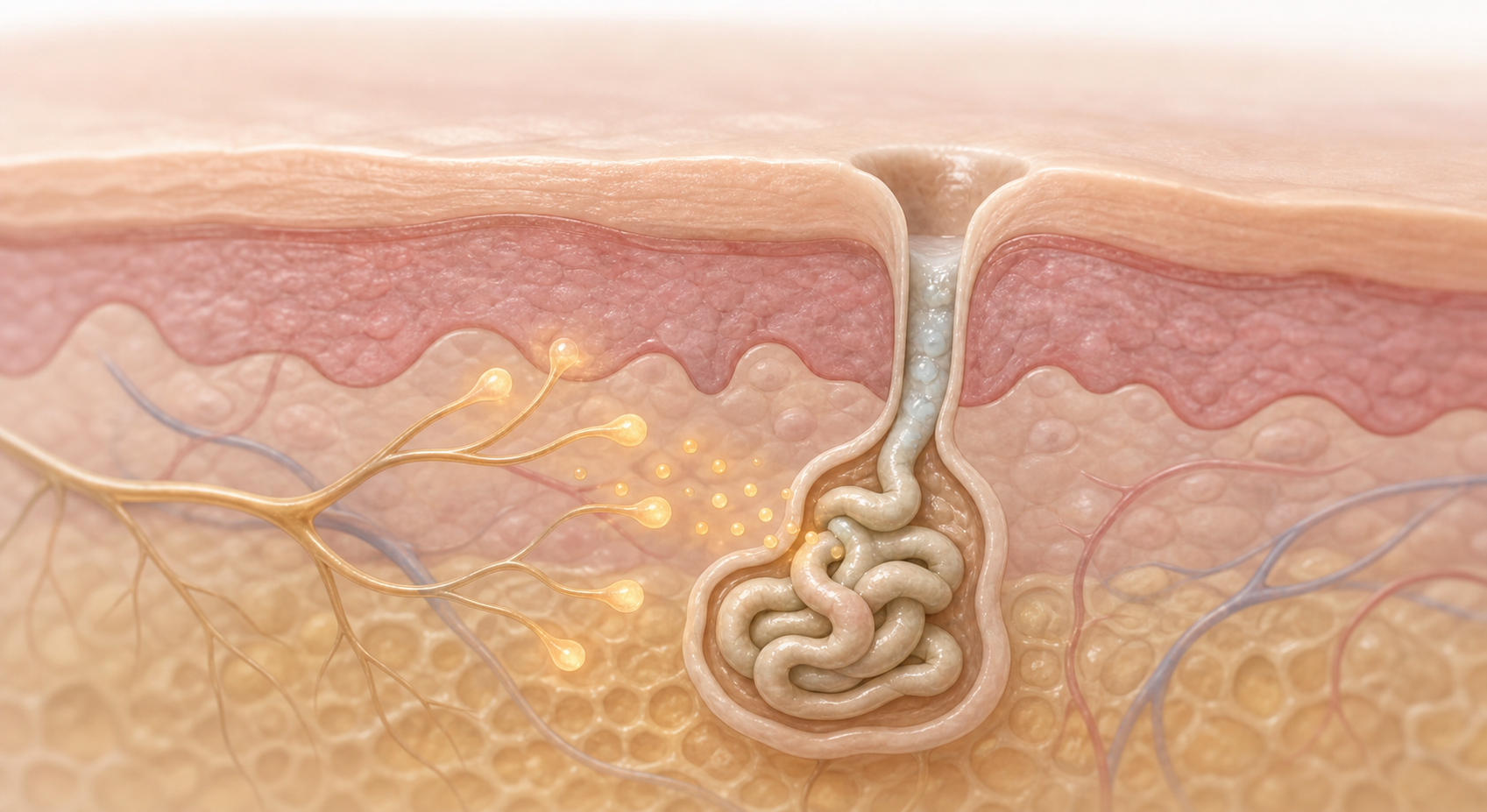
Your sweat glands wait for a chemical messenger called acetylcholine, released by nearby nerves, to land on receptors and switch the gland on. That handoff tells your eccrine glands, the ones behind most everyday sweat, to start producing.
Oxybutynin steps into that exchange. As a muscarinic receptor antagonist, it parks itself on those receptors so acetylcholine cannot bind. The signal never fully lands, and the gland produces less sweat.
How Effective Is Oxybutynin for Hyperhidrosis
Does it actually work? For most people, yes, with some variation. A 2025 review found oral oxybutynin (2.5 to 7.5 mg daily) improved symptoms in 60% to 97% of patients, with the strongest results in plantar hyperhidrosis.
Topical formulations track similarly. A 2024 systematic review reported meaningful HDSS improvement in 73.6% of patients versus 42.8% on placebo.
Oxybutynin Dosage for Sweating
Dosing starts low and builds slowly. For hyperhidrosis, oral oxybutynin usually begins at 2.5 mg once daily, then titrates upward, often reaching 5 mg twice daily as tolerance allows. A 2025 review found benefit across 2.5 to 7.5 mg daily. Topical gels studied range from 3% to 10% strength.
No single max dose fits everyone. Since this use is off-label, a provider should set and adjust it.
When to Take Oxybutynin for Sweating
Timing depends on your form.
Immediate-release tablets wear off within hours, so they are taken two or three times daily, spread across waking hours for steady coverage. Extended-release oxybutynin works once a day. Some providers suggest an evening dose if drowsiness becomes an issue [JAAD Reviews, 2025].
Topical gels are usually applied once at night to clean, dry skin. Confirm your own schedule with your prescriber.
How Long for Oxybutynin to Work for Sweating
Patience matters here more than most people expect. Some notice sweat easing within the first week or two, but a fair judgment of whether oxybutynin is working takes about four to six weeks of consistent use. Certain clinical guidance suggests waiting up to twelve weeks before adjusting a dose.
Your timeline depends on you and the zone being treated. Palms behave differently than underarms.
One thing to keep in mind: results are not permanent. Stop the medication, and sweating returns.
Oxybutynin Side Effects
Every drug in this class carries trade-offs, and oxybutynin is no exception. Most are mild and fade as your body adjusts.
The common ones, based on pooled data from hyperhidrosis studies [JAAD Reviews, 2025]:
- Dry mouth (the most commonly reported side effect)
- Constipation
- Blurred vision
- Drowsiness
- Dizziness
- Urinary hesitation
Because oral oxybutynin crosses the blood-brain barrier, it can cause confusion, sleepiness, and cognitive changes, which matter more for older adults [JAAD Reviews, 2025]. Topical gels carry a lighter systemic load, so the main complaint is skin irritation. Flag anything persistent with your prescriber.
Oxybutynin Warnings and Precautions
A few situations call for real caution first.
Because oxybutynin reduces sweat, it can blunt your body's cooling system, raising the risk of overheating in heat or hard exercise. Stay hydrated.
Older adults need extra care, since the drug can cause confusion, worsened by other anticholinergics.
Some conditions rule it out (this is not a complete list):
- Urinary retention
- Narrow-angle glaucoma
- Severe gastrointestinal conditions
Give your provider a full medication list first.
Oxybutynin for Night Sweats and Specific Sweat Zones
Not all sweating shows up during the day, and oxybutynin has been studied for the kind that hits at night. In primary sleep hyperhidrosis, drenching night sweats with no underlying cause, one case report described a reduction in long-standing nightly sweating with a single nightly dose, though case reports represent individual experiences and not broad clinical evidence.
Facial sweating is trickier. Hard to treat topically, oral oxybutynin becomes one of the few systemic options worth trying.
Let a provider weigh which formulation fits your zone.
Oral vs. Topical Oxybutynin for Sweating
The split comes down to where the drug goes. Oral oxybutynin travels through your whole system, making it better suited for generalized or multi-zone sweating. Topical gel concentrates at the application site, so less reaches the rest of your body and whole-body effects like dry mouth tend to be lighter [JAAD Reviews, 2025].
| Oral | Topical | |
|---|---|---|
| Reach | Body-wide | Application site |
| Best for | Generalized | One or two zones |
| Systemic effects | Higher | Lower |
Let your sweat pattern guide the call with a dermatologist.
Oxybutynin vs. Glycopyrrolate for Sweating
Both belong to the same anticholinergic family, quieting the acetylcholine signal at your sweat glands. Both are used off-label. The main difference is how they interact with the brain: glycopyrrolate does not cross the blood-brain barrier while oxybutynin does, so glycopyrrolate typically carries a lower risk of drowsiness or confusion.
Neither has been proven better head-to-head for cutting sweat. Glycopyrrolate also comes as a topical, Qbrexza glycopyrrolate wipes, FDA-approved for underarms. Your pattern and provider decide the fit.
What to Do If Oxybutynin Stops Working for Sweating
Feeling like oxybutynin quit on you? Effectiveness can dip for a few reasons: tolerance, slipped adherence, a hotter sweat season, or the condition itself progressing.
Before you write it off, loop in your provider. A dose tweak or pairing a topical with your oral routine may bring things back.
Alternatives to Oxybutynin for Hyperhidrosis
If oxybutynin was not the fit, several other paths exist, each suited to a different severity and goal:
- Prescription-strength aluminum chloride antiperspirants, the usual first-line for mild-to-moderate focal sweating, though irritation is common.
- Other topical anticholinergics: glycopyrronium cloth (Qbrexza) and sofpironium gel (Sofdra), FDA-approved in 2024, both for underarms.
- Iontophoresis for hyperhidrosis, which passes a mild current through water and works well for palms and soles, but needs frequent sessions.
- Botulinum toxin injections for hyperhidrosis, well-evidenced for severe localized cases, done in-office and repeated every few months.
- Microwave thermolysis, near-permanent but underarms only.
- Hyperhidrosis surgery, reserved as a last resort for treatment-resistant cases.
A dermatologist can match the option to your pattern.
How Twofold Treats Excessive Sweating with Oxybutynin
Twofold is a virtual sweat clinic connecting you with board-certified, sweat-specialized dermatologists online. If you're still weighing options, our guide on how to stop sweating covers the full range of treatments available. After a short intake, a dermatologist reviews your case within about 24 hours and, if it fits, writes a prescription.
The flagship treatment offered is a compounded topical oxybutynin 8% gel, made for hands, feet, underarms, face, back, chest, and groin.
Final Thoughts on Oxybutynin for Sweating
Most people who try oxybutynin for sweating see meaningful improvement, though the timeline and side effects vary. Dose, form, and your specific sweat zones all factor into how well it works for you. A dermatologist can help you figure out if it is the right fit.
FAQ
How does oxybutynin work for sweating, and is it FDA-approved for hyperhidrosis?
Oxybutynin blocks muscarinic receptors on sweat glands, preventing acetylcholine from triggering sweat production. Its use for hyperhidrosis is off-label; the FDA approved it for overactive bladder, but off-label prescribing is legal, common, and widely accepted in dermatology.
How long does oxybutynin take to work for sweating?
Most people notice some reduction in sweating within one to two weeks, but a fair read on whether it's working takes four to six weeks of consistent use. Some clinical guidance recommends waiting up to twelve weeks before adjusting a dose, since different body zones like palms versus underarms can respond at different rates.
Glycopyrrolate vs oxybutynin for sweating: which should I try?
Both are anticholinergics that reduce sweat by blocking acetylcholine signals, and both are used off-label for hyperhidrosis. The key difference is that glycopyrrolate does not cross the blood-brain barrier, so it typically carries a lower risk of drowsiness and confusion compared to oxybutynin, which is a meaningful consideration for older adults or anyone sensitive to those effects. No head-to-head trial has proven one cuts sweat better than the other, so your sweat pattern and a dermatologist's input should drive the decision.
What is the oxybutynin dosage for sweating, and is there a maximum dose?
Oral oxybutynin for hyperhidrosis typically starts at 2.5 mg once daily and titrates up, often reaching 5 mg twice daily, with a 2025 review finding benefit across 2.5 to 7.5 mg daily. There is no universal maximum since this is off-label use, and a provider should set and adjust your dose based on your response and side effects.
What happens if oxybutynin stops working for sweating?
A dip in effectiveness can come from tolerance, inconsistent use, seasonal changes in sweating, or the condition progressing. Before changing anything, talk to your prescriber. A dose adjustment or pairing an oral with a topical targeted at specific zones may restore results; do not adjust on your own.
If you see a mistake or something you think should be updated, let us know at hello@itstwofold.com!


