
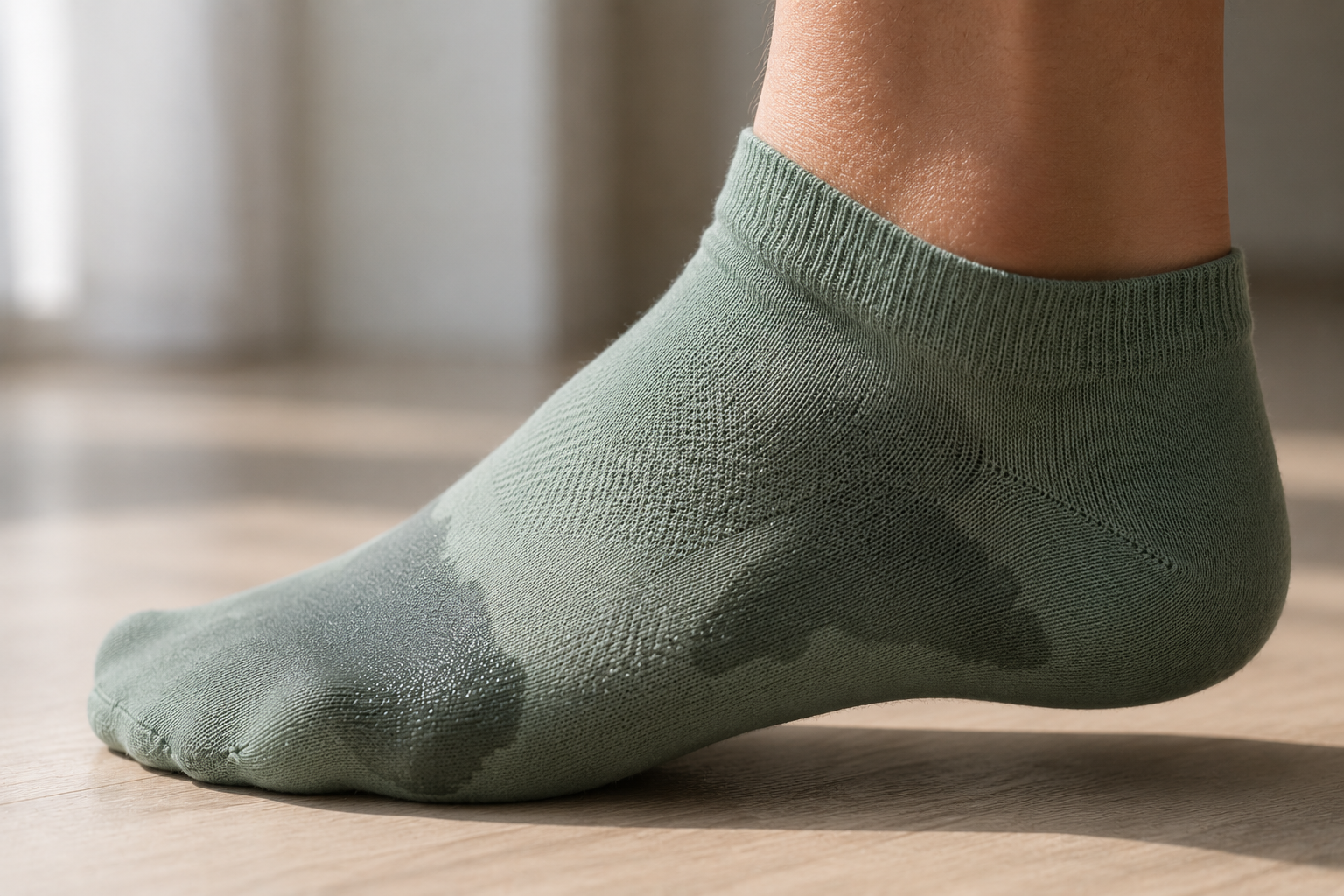
Cold, sweaty feet are one of those things that feel impossible to fix because the two symptoms seem like they cancel each other out. But they don't, and they share the same root cause. Once you know what's actually driving it, the path forward gets a lot clearer.
TLDR:
- Your sympathetic nervous system triggers both vasoconstriction and foot sweating at once, making cold and clammy feet a common combo.
- Causes range from stress and bad footwear to conditions like Raynaud's disease, hypothyroidism, or plantar hyperhidrosis (overactive sweat glands).
- Switch from cotton socks to merino wool or moisture-wicking blends since cotton traps sweat against your skin and deepens the chill.
- Daily habits like OTC antiperspirant on your soles and rotating shoes help many people see real improvement before any medical visit.
- Twofold is a virtual sweat clinic connecting patients to sweat-specialized dermatologists online.
Why Your Feet Feel Cold and Sweaty at the Same Time
Cold and sweaty at once feels like a contradiction, but the two pair up more often than you'd expect. The link is your sympathetic nervous system, the same nerves that fire when you're stressed, cold, or on edge. It does two things to your feet at once. First, it narrows the small blood vessels near your skin's surface, a response called vasoconstriction, pulling warm blood away and leaving your feet chilly. Second, it switches on the eccrine sweat glands packed into your soles.
Then physics takes over. Moisture on cool skin evaporates, and evaporation pulls heat away. Your feet get damp, the dampness cools them, and the chill deepens.
Common Causes of Cold and Sweaty Feet
Several things can leave your feet cold and clammy, ranging from harmless to worth a closer look. Here are the usual suspects.
- Plantar hyperhidrosis: overactive sweat glands that fire regardless of temperature. According to the International Hyperhidrosis Society, 25% of people with hyperhidrosis sweat excessively on their feet, usually alongside sweaty hands.
- Circulatory issues: conditions like peripheral arterial disease narrow the vessels feeding your feet, so less warm blood arrives.
- Raynaud's disease: cold or stress triggers small vessels in your toes to clamp down, turning them pale, chilly, and sometimes damp.
- Hypothyroidism: an underactive thyroid slows metabolism, leaving extremities cold.
- Anxiety and stress: your fight-or-flight response fires sweat glands and constricts vessels at once.
- Menopause: shifting hormones scramble temperature control.
- Illness or fever: your thermostat wavers while fighting infection.
When Cold and Sweaty Feet Is Likely Situational
Plenty of cold, sweaty episodes trace back to something you did that afternoon, not a condition you carry. If your feet went clammy inside plastic-lined sneakers, or after a day trapped in two layers of winter socks, the trigger is usually right there in your closet.
The same goes for nerves. Ten minutes before a big presentation, your stress response floods your soles with sweat; if you're wondering why your feet sweat so much, it pulls blood inward, and both settle once the moment passes. A fever does something similar, throwing off your internal thermostat until the illness clears. Sleeping under a heavy blanket can trap heat, kick off sweating, then leave your feet damp and cool when you kick free.
Tie the symptom to a clear cause like these, and it tends to fade on its own.
Warning Signs Worth Taking Seriously
Most cold, sweaty feet are a quirk, not an emergency. A few signs, though, deserve a provider's eyes instead of a wait-and-see approach.
- Toes that stay pale, blue, or blanched long after the trigger passes, instead of pinking back up.
- Pain or cramping in your feet, whether resting or walking, especially if it eases when you stop moving.
- One foot behaving differently from the other, since real asymmetry can point to a circulation problem on one side.
- Numbness, tingling, or a pins-and-needles feeling that lingers.
- Clammy, cold feet alongside unexplained weight changes or fatigue you can't otherwise account for.
Any of these, and it's worth booking a visit.
How Footwear and Socks Make It Worse
Your shoes and socks are doing more than you think, and usually not in your favor. Synthetic linings and rubber soles seal in warmth and moisture, building a damp little microclimate around your foot that eggs your sweat glands on. Slip the shoe off, that trapped moisture meets cooler air, and the chill hits hard.
Cotton socks get a good reputation they don't quite deserve. They soak up sweat, then hold it against your skin instead of wicking it away, so your feet sit in a wet layer all day.
Sandals seem like the fix, but bare feet against a warm plastic footbed can slide around in their own sweat too.
The upside is that footwear and socks are the fastest variables you can change today.
Socks That Help with Cold and Sweaty Feet
The right sock swaps out cotton for fibers that move moisture off your skin instead of trapping it.
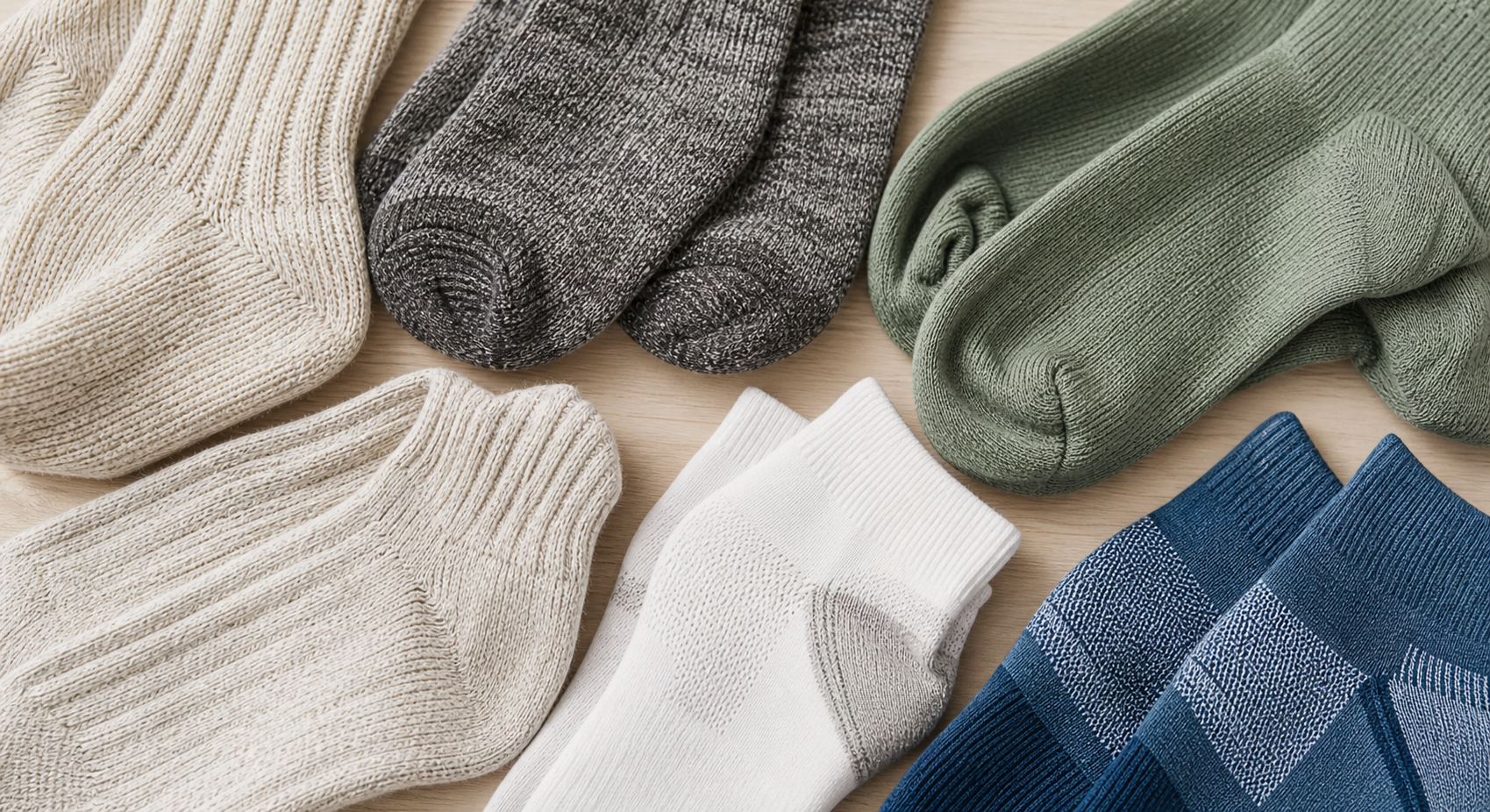
| Sock Material | Moisture Management | Warmth When Damp | Odor Control | Best For |
|---|---|---|---|---|
| Merino wool | Absorbs moisture vapor before it feels wet | Insulates even when damp | Good: natural lanolin inhibits bacteria | Cold climates, all-day wear |
| Bamboo viscose | Wicks moisture away from skin | Moderate | Excellent: natural antimicrobial properties | Odor-prone feet, warmer weather |
| Engineered synthetics (e.g., CoolMax) | Capillary action pulls sweat to fabric surface | Low: dries fast but less insulating | Moderate: depends on antimicrobial treatment | Athletic use, high-sweat activity |
| 100% cotton | Absorbs and holds moisture against skin | Poor: stays wet and cold | Poor: damp fabric breeds bacteria | Avoid for sweaty feet |
Skip 100% cotton and non-breathable synthetics. Look for mesh ventilation zones, antimicrobial treatment, and a snug fit that won't bunch.
Home Remedies and Daily Habits for Sweaty Feet
Before anything medical enters the picture, a handful of daily habits handle mild or situational sweating. Consistency is the trick, and most of these cost next to nothing.
- Wash your feet daily with soap, then dry thoroughly, paying attention to the skin between your toes where moisture likes to linger.
- Dust your soles with foot powder, or apply an antiperspirant for feet at night, the same aluminum-based kind you'd use under your arms.
- Rotate your shoes so no pair goes back on before it has fully dried out, ideally 24 hours between wears.
- Go barefoot at home when you can, giving your feet open air to breathe.
- Soak your feet in cool or lukewarm water to calm overactive glands.
For a fuller breakdown of how to stop feet sweat, stick with these for a couple of weeks, and many people notice a real difference before ever calling a doctor.
Medical Treatment Options for Plantar Hyperhidrosis
When home habits aren't enough, a treatment ladder exists, moving from gentle to more involved:
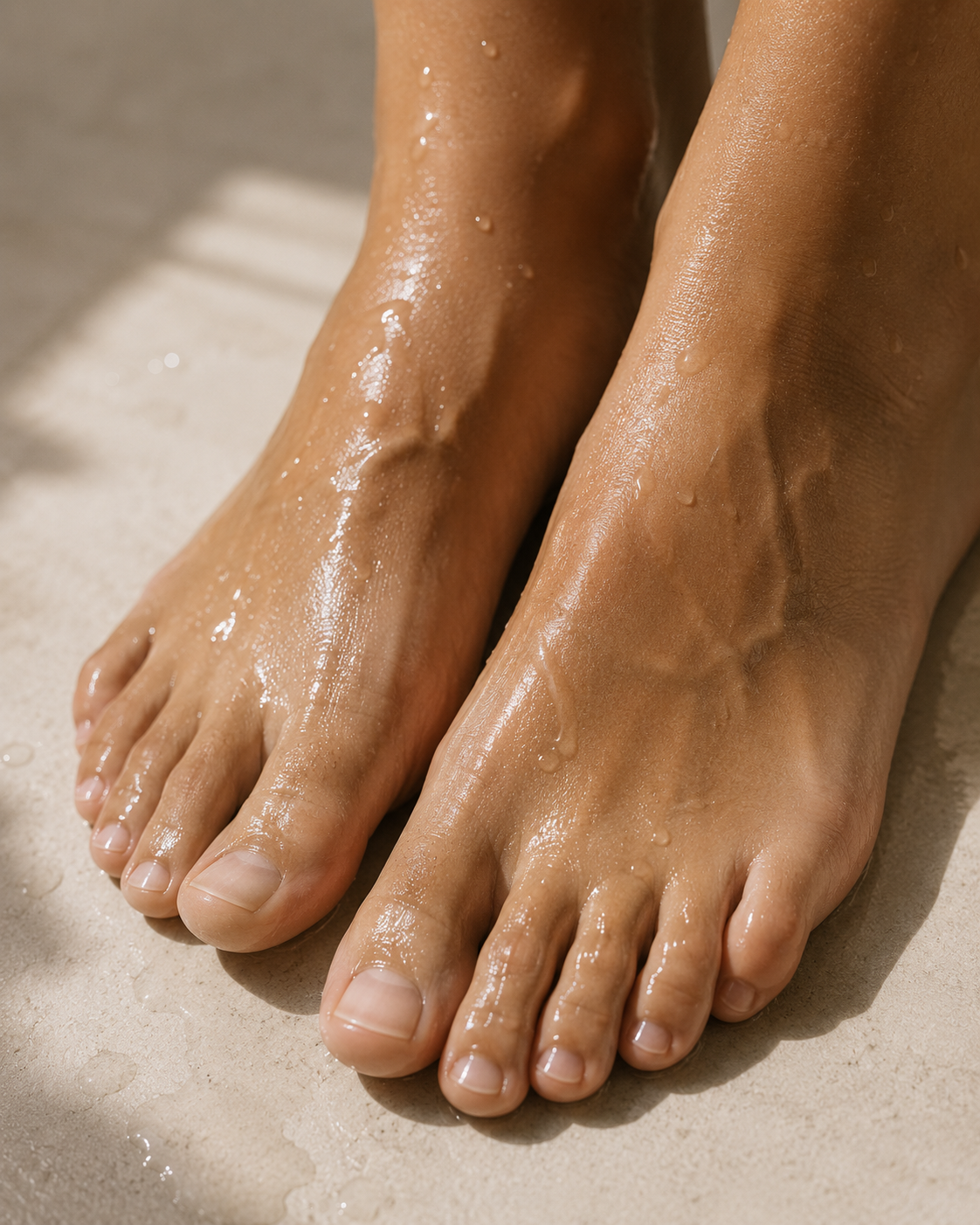
- Aluminum chloride antiperspirants, OTC then prescription-strength, plug sweat ducts near the surface.
- Iontophoresis for hyperhidrosis, which sends a mild current through water to quiet the glands. A 2022 systematic review found over 80% of palmoplantar users saw improvement, though it means repeated sessions.
- Topical anticholinergics like oxybutynin gel, which block the nerve signal to the gland. A 2025 systematic review found topical oxybutynin among the effective, well-tolerated options for primary palmar and plantar hyperhidrosis.
- Botulinum toxin injected into the soles. Plantar shots can hurt, so ask a dermatologist about pain management.
Each carries trade-offs in cost, upkeep, and comfort.
When to Talk to a Doctor About Sweaty Feet
Self-care has its limits, and a few patterns are the signal to hand things to a professional. Book a dermatologist or podiatrist if your sweating:
- Has stuck around for six months or longer.
- Shows up at least once a week.
- Gets in the way of walking, standing, or slipping on open shoes.
- Comes with stubborn odor, cracked or macerated skin, or infections that keep returning.
Only about half of people with hyperhidrosis ever discuss their symptoms with a provider, which is a shame, because real treatments exist.1 Cold, sweaty feet is a medical condition, not a hygiene slip; learn more about managing excessive feet sweating with practical tools that can quiet it.
How Twofold Treats Plantar Hyperhidrosis
We built Twofold as a virtual sweat clinic for people with hyperhidrosis, plantar cases included. The flagship product available is a compounded topical oxybutynin 8% gel, made with penetration-enhancing ingredients meant to move through the thick skin on your soles, where many other topical products stall out.
Here's how it runs:
- A sweat-specialized dermatologist reviews your online intake in about 24 hours, no in-person visit needed.
- When a pill fits better, that same dermatologist can prescribe glycopyrrolate for hyperhidrosis or oral extended-release oxybutynin instead.
- Plans start at $150 for a three-month supply ($50/mo), with free shipping, unlimited follow-up messaging, and no insurance required. You can also try reducing excessive sweating with lifestyle changes alongside any prescription approach.
Final Thoughts on Managing Cold and Sweaty Feet
Cold and sweaty feet are more common than people admit, and more treatable than most people know. A few habit changes can quiet things down for mild cases, and a dermatologist can step in when they do not. Your feet do not have to feel this way indefinitely.
FAQ
Why are my feet cold and sweaty at the same time if sweating is supposed to cool you down?
Cold, sweaty feet happen because your sympathetic nervous system triggers two responses at once: it constricts blood vessels in your feet (pulling warm blood away) while simultaneously activating the sweat glands in your soles. The sweat then evaporates off already-cool skin, which pulls even more heat away, deepening the chill.
What's the difference between plantar hyperhidrosis and just having sweaty feet sometimes?
Plantar hyperhidrosis means your sweat glands fire regardless of temperature or activity, producing up to 4 to 5 times more sweat than your body needs for temperature regulation.1 Situational sweating, like damp feet after wearing sealed sneakers all day or before a stressful presentation, tends to resolve once the trigger is gone; plantar hyperhidrosis persists at least weekly for six months or more and often disrupts daily activities like walking or wearing open shoes.
What are the best socks for cold sweaty feet?
Merino wool and bamboo viscose are the top picks for cold, sweaty feet. Merino absorbs moisture vapor before it feels wet and insulates even when damp; bamboo wicks well and has natural antimicrobial properties that cut odor. Skip 100% cotton, which holds moisture against your skin all day instead of moving it away.
Can I treat cold sweaty feet at home before seeing a doctor, or do I need a prescription?
Start with daily foot washing and thorough drying, OTC aluminum-based antiperspirant applied to your soles at night, rotating shoes every 24 hours, and switching to moisture-wicking socks. Many people see a real difference within a couple of weeks of sticking to these habits consistently. If sweating persists after six months, shows up at least weekly, or is causing skin breakdown or infections, that's the point to bring a dermatologist into the picture.
How does topical oxybutynin gel available throughTwofold work for plantar hyperhidrosis, and is it FDA-approved?
This compounded topical oxybutynin 8% gel blocks the nerve signal (acetylcholine) that tells sweat glands to fire, applied once nightly to the soles. It's worth knowing plainly: oxybutynin's use for hyperhidrosis is off-label, and the compounded gel is not separately FDA-approved, though off-label prescribing is a common and accepted dermatology practice. A sweat-specialized dermatologist reviews your intake online within about 24 hours to determine whether it's the right fit for your situation.
If you see a mistake or something you think should be updated, let us know at hello@itstwofold.com!


