
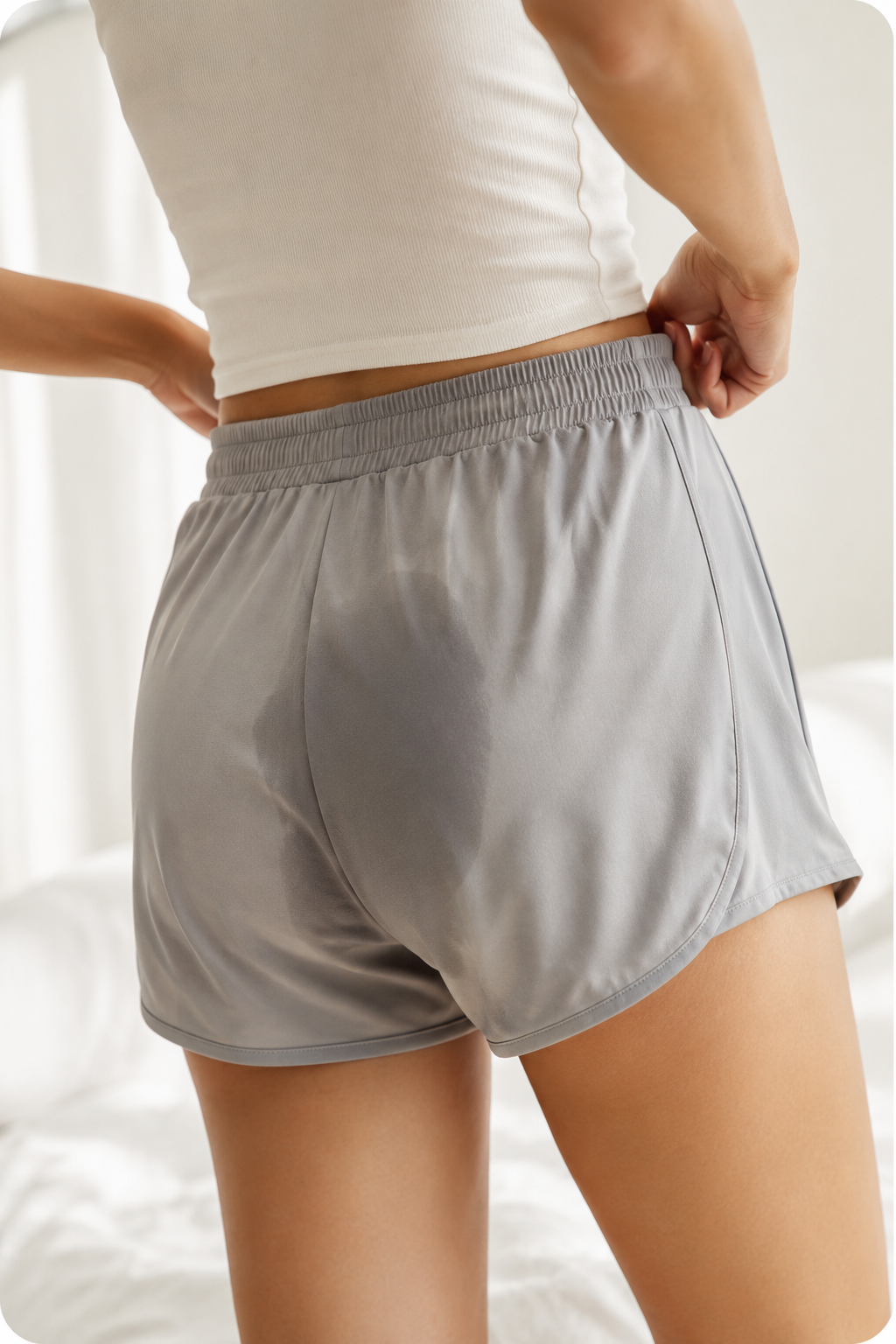
You sit down, you warm up, and suddenly your bum feels like it's been through a car wash. If you're Googling how to stop leaving sweat marks on seats, why your anus itches at night, or what the poop sweats even are, this is the page for you. Butt sweat is normal, but that doesn't mean you have to just live with it soaking through your pants or making school chairs awkward. From the right antiperspirant for your buttocks to simple hygiene habits and fabric swaps, there are a lot of ways to manage it, and we'll cover all of them.
TLDR:
- Butt sweat is completely normal, but tight clothing and prolonged sitting trap moisture and make it worse
- The "poop sweats" are real, triggered by the vasovagal reflex in your nervous system, not surface sweat
- Pruritus ani (anal itching) affects an estimated 5% of people[1] and peaks at night, linked to trapped dampness
- Cotton or moisture-wicking underwear plus a clinical-strength antiperspirant are your first practical fixes
- Twofold connects you with dermatologists online who can prescribe treatment (if appropriate) for butt sweat
Is Butt Sweat Normal?
Short answer: yes, completely. Everyone sweats there, and the mechanics match the rest of your body. Your buttocks carry eccrine glands, the tiny glands releasing clear, odorless fluid to cool your skin as temperature climbs. The thicker, odor-linked sweat comes from apocrine glands near the genitals and anus, not across the cheeks.
So why does it feel worse down there? The space between your cheeks is tight, and once you add clothing and hours of sitting, moisture gets trapped instead of evaporating. That's how normal sweat becomes noticeable.
What Causes Butt Sweat
Butt sweat rarely traces back to a single trigger. Most of the time it's a mix of your environment, your habits, and occasionally something medical worth ruling out.
Situational triggers
These everyday culprits explain most cases.
- Heat and humidity push your core temperature up, so your eccrine glands cool the skin. If you've ever wondered why you sweat so much, your environment is usually the first place to look.
- Prolonged sitting builds a warm, enclosed pocket with no airflow, so sweat lingers.
- Intense exercise ramps up sweat everywhere, buttocks included.
- Tight or synthetic clothing traps heat and blocks evaporation.
Lifestyle factors
Carrying more body weight raises skin-on-skin contact and resting heat. Spicy food, caffeine, and chronic stress all poke the nervous system that flips sweat on.
Medical causes
When sweat shows up without heat behind it, a medical driver may be involved. Focal hyperhidrosis, overactive eccrine glands, is common. Hyperthyroidism, menopause, pregnancy, diabetes, and some medications are among the recognized secondary causes.[1] If your pattern fits, talk with a provider.
Why Your Bum Always Feels Wet
The butt crack is basically a sealed channel. Skin presses against skin, air barely moves through, and any sweat your eccrine glands release has nowhere to evaporate. Ordinary moisture can feel like a lot, since it sits against warm skin instead of drying.
Polyester or nylon underwear traps heat and blocks airflow. Dampness peaks when you're still, like long stretches at a desk or behind the wheel.
Left wet for hours, skin softens and breaks down, a process called maceration. That opens the door to chafing, plus bacteria and fungi that thrive in warm folds.
Why You Sweat When You Need to Poop
Here's the twist: the sweat that hits when you need to poop has almost nothing to do with surface dampness. This full-body reaction, sometimes called the poop sweats, brings a sudden wave of sweating, flushing, nausea, or lightheadedness during a bowel movement. It's driven by the vasovagal reflex, the same nerve response that makes some people lightheaded at the sight of blood, triggered when abdominal pressure or pain activates the vagus nerve.
Your vagus nerve tracks abdominal pressure. Strain hard or feel sharp pain, and it can drop your heart rate and blood pressure, triggering a brief wave of sweating, flushing, or nausea. These are a form of nervous sweating during stressful situations. Hard stools are a common trigger. Most episodes pass within a few minutes once the bowel movement is complete, but if yours come with chest pain or fainting, check in with a provider.
Sweaty Bum and Itching: The Connection
Doctors call persistent anal itching pruritus ani, and it affects an estimated 1 in 20 people, more often in men and adults over 40. Sweat sits alongside diet, poor hygiene, hemorrhoids, and gut irritation as a trigger. A provider can confirm whether sweat is the driver or something else needs attention.
The itch peaks at night and after a bowel movement. Scratching feels like relief but backfires, deepening irritation and trapping you in an itch-scratch loop.
Management comes down to staying clean and dry:
- Cleanse gently after each bowel movement, then pat dry instead of rubbing.
- Skip perfumed soaps and moist wipes.
- Choose breathable fabrics.
- Over-the-counter hydrocortisone cream can calm acute flare-ups.
If it drags on past a few weeks, see a provider to rule out infection or a skin condition.
Clothing and Fabric Choices That Reduce Butt Sweat
Your underwear does more work here than anything in your closet. Cotton soaks up moisture and lets air move through, while a moisture-wicking nylon-spandex blend pulls sweat off the skin and dries fast. Either beats a fabric that seals in heat.
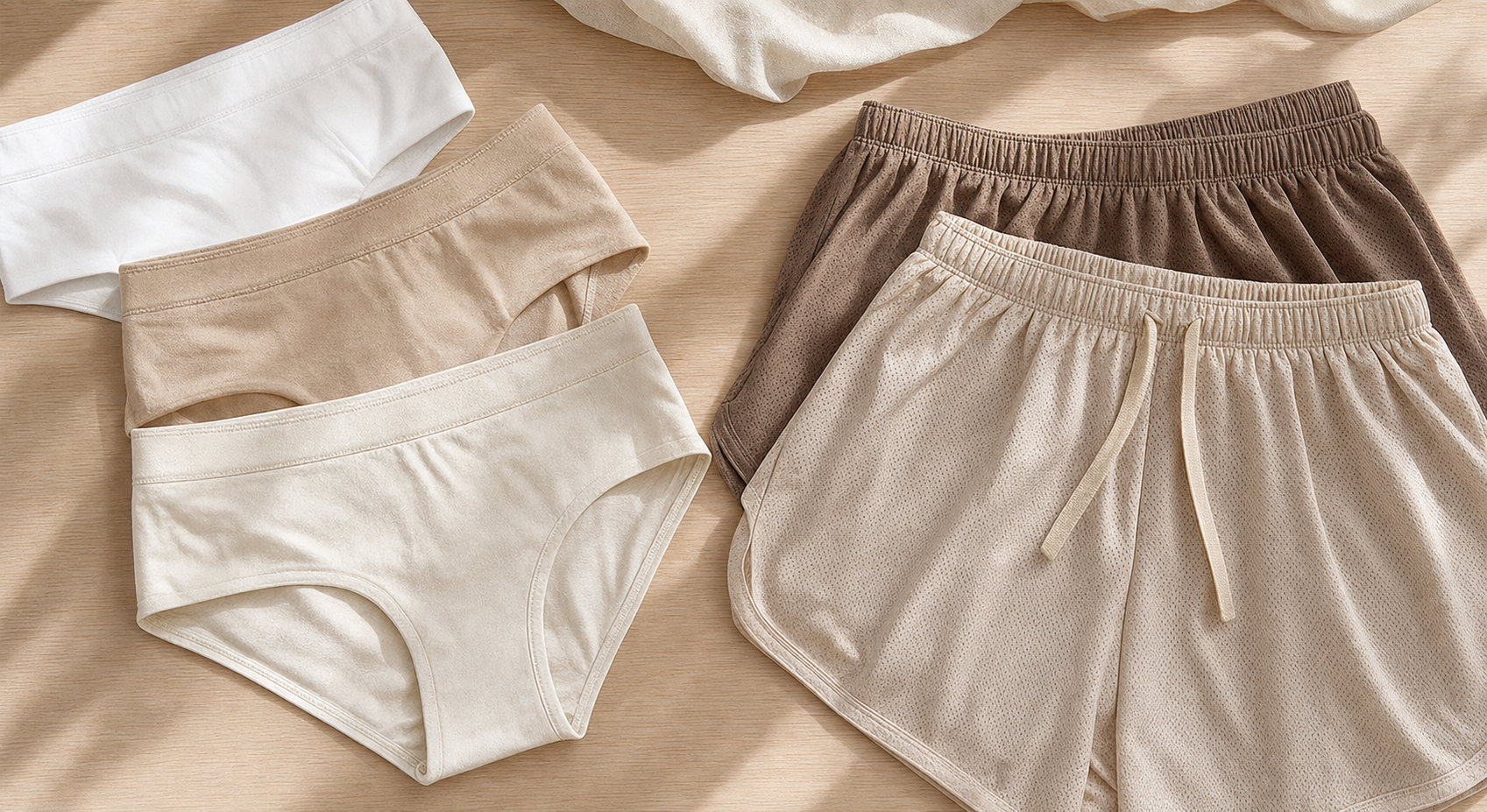
For pants, a few small choices cut down on visible marks:
- Pick looser cuts so air can circulate instead of pressing damp fabric to your skin.
- Lean toward darker colors, which hide marks better than light shades.
- Slip on sweat-wicking shorts as a base layer on hot days or at the gym.
Skip tight jeans, leather, and vinyl, which trap heat and block evaporation.
Hygiene Hacks and Daily Habits That Help
Small routines matter more than any single trick. If you sit for hours at school, work, or on a flight, stand up every 30 to 60 minutes so air reaches the area and moisture can dry.
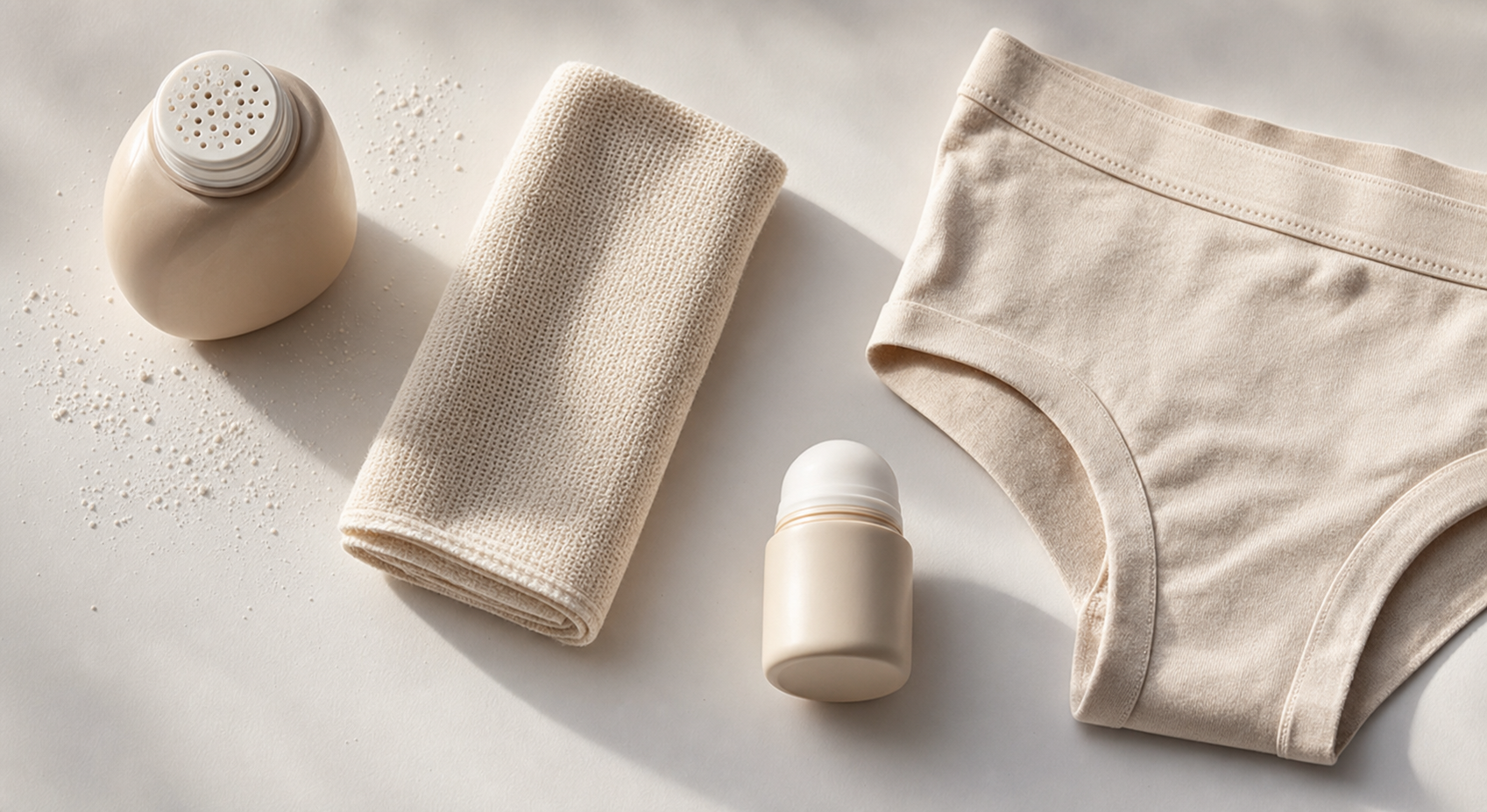
A few more habits worth building:
- Dust baby powder or medicated body powder across your buttocks and crack before long sits or a workout. It's cheap, absorbs moisture, and cuts friction.
- Pack spare underwear and swap mid-day if you sweat heavily.
- Shower or wipe down after the gym instead of sitting in damp clothes, which invites bacteria and odor.
- Ease off spicy food, caffeine, and alcohol beforehand, since all three rank among the sweat triggers that make you sweat more.
Antiperspirants and Powders for the Buttocks
Start with the antiperspirant vs deodorant distinction, because people conflate the two. Deodorant masks odor. Antiperspirant contains aluminum salts that physically plug your eccrine sweat ducts, cutting output where you apply it. For mild butt sweat, a clinical-strength antiperspirant is a practical first move.
Using it on your cheeks and crack is off-label, though some people do it. The skin there is thin, so aluminum penetrates more readily. If OTC formulas aren't enough, prescription-strength aluminum chloride hexahydrate formulas (such as 20% solutions prescribed by a dermatologist) can reduce output further, though skin irritation, burning, and stinging are possible side effects.
Powders work differently. Cornstarch, talc, or zinc oxide versions absorb sweat after it forms. Layer one over an antiperspirant for fuller coverage.
| Antiperspirant | Body Powder | |
|---|---|---|
| How it works | Aluminum salts physically plug eccrine sweat ducts, reducing output | Absorbs sweat after it forms; does not reduce gland output |
| Active ingredients | Aluminum chloride / aluminum chloride hexahydrate | Cornstarch, talc, or zinc oxide |
| OTC strength | Standard formulas; clinical-strength options available | Baby powder or medicated body powder |
| Prescription option | Yes, up to 20% aluminum chloride hexahydrate (e.g., Drysol) | No |
| Best for | Reducing how much you sweat | Managing moisture and friction throughout the day |
| Can be combined? | Yes, apply antiperspirant first, then layer powder on top | Yes, pairs well with antiperspirant for fuller coverage |
| Potential downsides | Skin is thin in this area; irritation, burning, or stinging possible | Minimal; avoid inhaling talc-based powders |
How to Stop Leaving Sweat Marks on Seats
Sweat marks appear when moisture soaks through your underwear, saturates your pants, and transfers to whatever you're sitting on. Wicking layers underneath keep less sweat reaching the outer fabric, so the mark stays smaller or never forms. The same principle applies if you're dealing with groin sweat alongside butt sweat.
For hard seating like plastic school chairs or a hot car seat, put a barrier between you and the surface:
- Fold a thin towel or slip a breathable seat cushion under you for airflow.
- Keep a compact seat cover in your bag, the kind athletes use courtside.
- Stand whenever you can to cut contact time and heat buildup.
When to See a Doctor About Butt Sweat
Occasional dampness during a workout or heat wave is nothing to flag. What deserves attention is sweat that soaks your clothes with no heat or effort behind it, shows up while you rest, or starts reshaping your daily choices. That pattern can point to primary hyperhidrosis, a diagnosable condition with treatments that can help manage symptoms.
A few signals mean you should book a visit:
- Excessive sweating that appears suddenly in adulthood with no clear cause.
- Sweating paired with unexplained weight loss, fever, or whole-body night sweats.
- Recurring rashes, fungal infections, or raw, open skin.
A GP or dermatologist can rule out an underlying driver.
How Twofold Approaches Persistent Butt Sweat
When butt sweat crosses into hyperhidrosis, antiperspirants manage the symptom while overactive eccrine glands keep firing. Prescription treatment blocks the nerve signals telling those glands to switch on.
That's where we come in. Twofold pairs you with board-certified, sweat-specialized dermatologists online, no in-person visit needed. The flagship treatment is a compounded topical oxybutynin 8% gel, an anticholinergic you apply nightly that blocks acetylcholine signals to your sweat glands, reducing production at the site of application. This use is off-label, and the compounded gel is not separately FDA-approved, so we say that plainly.[2] Most people notice an initial change within one to two weeks, with fuller results building over about four weeks of nightly use. Results are not permanent, and sweating can return if treatment stops. It manages symptoms, not the underlying condition.
Final Thoughts on Why Bums Sweat and How to Stop It
A sweaty bum is common, manageable, and nothing to feel embarrassed about. Whether your fix is breathable cotton, powder, or a stronger antiperspirant, there's a real path forward. If sweat is showing up at rest or disrupting your day, that's worth a conversation with a dermatologist.
FAQ
What causes butt sweat and why does my bum always feel wet even when I'm not hot?
Butt sweat comes from eccrine glands responding to heat, activity, stress, diet, and sometimes underlying conditions like hyperhidrosis. The crack traps moisture against warm skin with almost no airflow, so even a small amount of sweat feels constant and wet because it never gets a chance to dry the way it would on your arm or leg.
Is butt sweat a sign of hyperhidrosis, or is it normal?
Occasional butt sweat during exercise, heat, or long sits is completely normal. When sweat soaks through your clothes with no heat or effort behind it, happens at rest, or starts changing how you dress and move through your day, that pattern is worth talking to a provider about, since it can point to primary hyperhidrosis.
Why do I sweat when I need to poop, and how long do poop sweats last?
The poop sweats are triggered by your vagus nerve reacting to abdominal pressure or pain, dropping heart rate and blood pressure and producing cold sweats or nausea. Most episodes pass within a few minutes once the bowel movement is complete, but recurring episodes with chest pain or fainting warrant a visit to a provider.
What's the best antiperspirant for the buttocks, and when should I consider prescription treatment instead?
A clinical-strength OTC antiperspirant applied to clean, dry skin is a reasonable first step for mild butt sweat, since aluminum salts physically block eccrine ducts where you apply them. If OTC options stop working or cause irritation, a dermatologist can prescribe stronger formulas or, for hyperhidrosis, a treatment like compounded topical oxybutynin that blocks the nerve signals telling sweat glands to fire in the first place.
How do I stop leaving sweat marks on seats and stop bum sweat on pants?
Moisture-wicking base layers keep sweat from saturating outer fabric, which is what causes visible marks on pants and seats. For chairs at school, work, or the gym, a thin towel or breathable seat cushion creates an airflow barrier between you and the surface, cutting both contact heat and transfer.
If you see a mistake or something you think should be updated, let us know at hello@itstwofold.com!


